
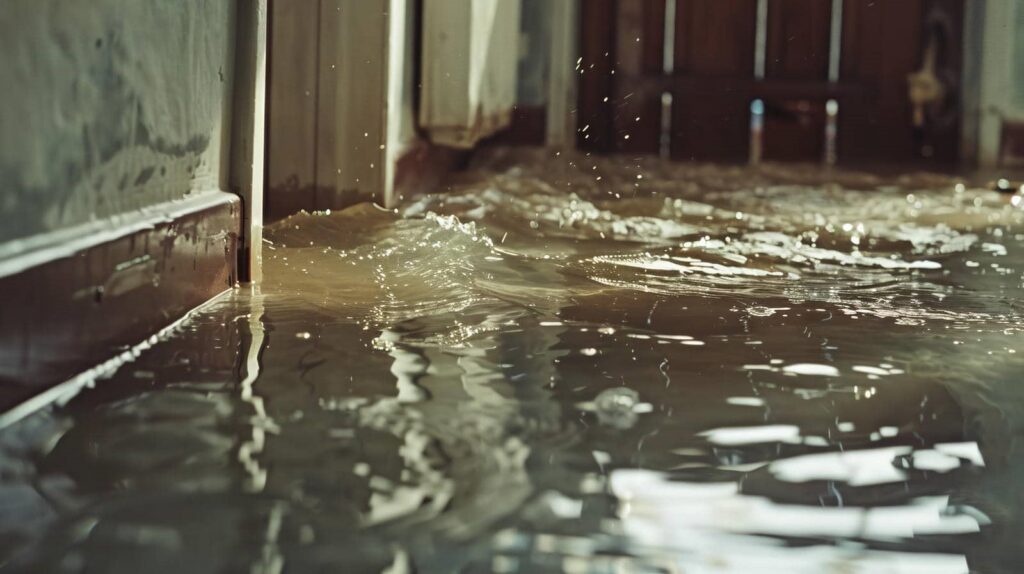
Most homeowners don’t realize how fast water damage can turn structural materials into a mold risk. You need to shut off the source first, then protect yourself with gloves and boots before you touch anything. After that, remove standing water, move dry items out, and start drying the area right away. The next few emergency water damage cleanup steps can determine what you save, what you lose, and when you need help.
Key Takeaways
- Shut off the water source immediately and, if safe, disconnect nearby electrical devices.
- Protect yourself with boots, gloves, eye protection, and turn off electricity if the area is unsafe.
- Remove standing water quickly using a pump, wet/dry vacuum, buckets, and towels.
- Dry the area with fans, open windows, and a dehumidifier, then clean and disinfect hard surfaces.
- Document damage for insurance, discard unsalvageable porous materials, and call a professional for widespread or contaminated water.
Stop Water Damage at the Source
First, shut off the water at its source to stop the damage from spreading. Locate the main valve or the nearest fixture valve, then turn it clockwise until it stops.
If a supply line bursts, close the branch valve first, then the main shutoff if needed.
Once the flow stops, check for visible leaks under sinks, behind toilets, and near appliances.
If you can, unplug nearby electrical devices and move them only after the area is dry enough to handle safely.
Document the affected spots with photos so you can track progress.
These emergency water damage cleanup steps help you regain control fast and keep your home team on the same page.
Stay calm, act methodically, and you’ll reduce damage before restoration starts.
Protect Yourself Before Cleanup
Before you step back into the wet area, make sure it’s safe to enter. Shut off electricity to the affected room if water may have reached outlets, cords, or appliances.
Wear rubber boots, waterproof gloves, long sleeves, and eye protection so you can work with confidence. If you smell gas, see sparks, or notice sagging ceilings, leave and call a professional right away.
Open windows and doors only if it’s safe, so you can improve airflow without risking exposure. Keep children and pets out of the area, and set your phone in a dry pocket or bag.
Grab a flashlight before you move around, since wet floors hide hazards. When you protect yourself first, you protect your whole home team.
Remove Standing Water Fast
Once you’re protected and the area is safe to enter, remove standing water as quickly as you can to limit further damage.
Start with the deepest section and work toward the exit so you don’t spread water. Use a wet/dry vacuum, sump pump, or buckets, depending on the amount. Keep cords clear of water and unplug equipment before moving it.
- Check water depth and choose the fastest tool.
- Pump or vacuum continuously until the floor is exposed.
- Squeegee remaining water into one low point.
- Finish with towels for thin puddles.
Act fast, stay organized, and keep circulating fresh air. The quicker you clear the water, the better your home can recover, and you’re already taking the right first steps as a homeowner.
Move Salvageable Belongings to Safety
Move salvageable items out of the wet area as soon as you’ve removed the standing water. First, sort belongings into three groups: keep, inspect, and discard.
Carry dry furniture, electronics, documents, and family keepsakes to a clean, stable room with good airflow. Use gloves, plastic bins, and towels so you don’t transfer contamination to other spaces.
Lift items instead of dragging them to avoid tearing fabric or scratching floors. If something feels heavy, ask a family member or neighbor to help; teamwork keeps everyone safe.
Label boxes clearly and place them on elevated surfaces to prevent contact with residual moisture. Handle each item carefully, and you’ll protect what matters while giving your home a faster path to recovery.
Dry Out Water Damage Before Mold Grows
Start drying the affected area immediately so moisture doesn’t have time to feed mold growth. You can protect your home by acting fast and staying methodical, just like the rest of us do in an emergency.
- Open windows and run fans to move air across wet surfaces.
- Set up a dehumidifier to pull humidity down and speed evaporation.
- Remove wet rugs, pads, and other porous items that hold water.
- Wipe hard surfaces with clean towels, then repeat until they feel dry.
Check progress every few hours, and keep air moving until everything feels cool, dry, and stable.
If you stay consistent now, you’ll lower the chance of mold and make the rest of cleanup easier for everyone involved.
Find Hidden Moisture Behind Walls
You should check the wall surfaces for dampness by feeling for cool spots, soft drywall, or paint that’s bubbling or peeling.
Next, use a moisture detection meter to scan suspicious areas and confirm whether water has penetrated behind the wall.
If readings stay elevated, mark those sections so you can target drying and prevent hidden damage from spreading.
Check Wall Dampness
- Start at the lowest visible waterline.
- Press along seams, corners, and trim.
- Note bubbling paint, warping, or stains.
- Mark suspect spots for follow-up action.
You’re not overreacting; you’re protecting your home like a pro.
This simple check helps you narrow down hidden damage and stay one step ahead while the cleanup process unfolds.
Use Moisture Detection
If the visible dampness points to more than surface water, use a moisture meter to check behind walls and catch hidden saturation early.
Start at the wettest area, then scan outward in a grid so you can map the spread. Compare readings on dry nearby walls to spot abnormal moisture levels.
Check baseboards, corners, and around outlets, but don’t open anything unless you’re sure the power is off. Mark high readings with painter’s tape so you can track changes after drying starts.
If the meter keeps showing elevated moisture, you’ve likely got water trapped in the wall cavity. That’s your cue to bring in your cleanup crew or restoration pro, because your home team works best when everyone acts fast together.
Clean and Disinfect Water-Damaged Surfaces
Start by cleaning all hard surfaces with soap and clean water to remove dirt, silt, and residue.
Next, disinfect any contaminated areas with an appropriate EPA-registered solution, following the label’s contact time so it can work properly.
Afterward, dry the surfaces with fans and dehumidifiers, and keep air moving until everything’s completely dry.
Surface Cleaning Basics
Once standing water is removed and the area is dry enough to work safely, you should clean hard surfaces with warm water and a detergent to lift dirt, silt, and residue.
Work from the cleanest area toward the dirtiest so you don’t spread contamination. Use a soft cloth or sponge, rinse often, and change the solution when it clouds.
- Wear gloves and eye protection.
- Test a small spot first.
- Wash surfaces in sections.
- Dry everything with clean towels or airflow.
For painted walls, tile, counters, and sealed floors, stay gentle but thorough.
If you’re part of a household cleanup team, keep everyone on the same routine so the job feels manageable.
Proper surface cleaning helps you regain control, protect finishes, and prepare the space for the next recovery step.
Disinfecting Contaminated Areas
After you’ve washed away visible dirt and residue, disinfect any contaminated surfaces that may have been exposed to floodwater, sewage, or other unsanitary water.
Wear gloves and eye protection, then mix and apply a disinfectant labeled for nonporous surfaces, following the manufacturer’s dilution and contact-time instructions.
Work from cleaner areas toward the most contaminated ones so you don’t spread germs. Use fresh cloths or disposable towels, and replace them often.
Scrub seams, corners, and high-touch spots like handles, switches, and cabinet edges. Keep children and pets out of the area until you finish.
Rinse only if the product label requires it, then wash your tools and hands thoroughly.
If you’re unsure about materials or contamination level, choose a professional team you can trust.
Safe Drying Methods
When the cleaned and disinfected surfaces are ready, dry them quickly with controlled airflow to slow mold growth and limit further damage. You’re not alone here; follow a simple routine:
- Open windows and doors if outdoor air is dry.
- Place fans so air moves across wet surfaces, not directly into them.
- Run a dehumidifier to pull moisture from the room.
- Lift baseboards, remove wet rugs, and space belongings apart for circulation.
Check humidity with a meter and aim below 60%.
Dry wall cavities, flooring, and furniture until they feel fully dry and readings stabilize.
Replace soaked insulation and porous materials that won’t dry fast.
If you see swelling, odor, or hidden moisture, call a water damage pro soon.
Document Water Damage for Insurance
Before you move or discard anything, document the water damage for your insurance claim with clear, dated evidence.
Start by taking wide photos of every affected room, then zoom in on stains, warped materials, and standing water. Capture the source if it’s safe to do so, plus serial numbers on damaged equipment.
Record a short video while narrating what you see and the date. Make a simple inventory with each item, its condition, and where it was found.
Save receipts for emergency supplies, towels, fans, and cleanup services. Back up files to cloud storage and email copies to yourself.
Then contact your insurer, share the claim number, and keep notes from every conversation.
You’re not handling this alone; organized records help your whole recovery team move forward.
Know What to Throw Away
You’ll need to sort damaged items quickly and discard anything that can’t be safely cleaned or fully restored. Start by separating salvageable belongings from items with structural damage, mold growth, or persistent odors. Work methodically so you and your household can stay organized and confident.
- Throw away soaked drywall, insulation, and ceiling tiles.
- Discard carpet padding, particleboard, and swollen laminate that won’t dry flat.
- Toss food, cosmetics, medicines, and porous baby items exposed to contaminated water.
- Remove mattresses, upholstered furniture, and paper goods that stayed saturated too long.
Place debris in labeled bags, and keep questionable items isolated until you’ve checked them carefully.
When you’re decisive here, you protect your home’s health and help your cleanup team move faster.
Call a Water Damage Pro When Needed
After you’ve sorted out what to discard, bring in a water damage pro if the loss is widespread, involves contaminated water, or has reached walls, floors, or hidden spaces. You’ll get faster drying, safer sanitation, and a clearer path to recovery.
First, shut off power to affected areas if it’s safe. Then document damage with photos and notes for your claim. Next, call a certified crew, ask about moisture mapping, antimicrobial treatment, and structural drying, and request an arrival time.
While you wait, keep kids and pets away, and don’t lift warped flooring or drill drywall. When the team arrives, share what happened and where you found water.
Acting early helps protect your home and keeps you connected to a trusted response team.
Summary
By acting fast, you can keep a small leak from becoming your own Tower of Babel. First, stop the water and protect yourself. Next, remove standing water, save what you can, and dry everything thoroughly. Then clean, disinfect, and document the damage for insurance. Finally, throw away unsalvageable items and call a pro when the loss is beyond your tools. You’ve got a clear path to recovery.