
If your property takes on water, knowing how to prevent mold after water damage is critical because mold can begin growing within 24 to 48 hours. You should remove standing water, dry all affected areas with fans and dehumidifiers, and discard materials that stay soaked. Clean hard surfaces with a mold-control product, then keep indoor humidity below 60%. But if the damage runs deep, the next step matters more than most owners expect.
Key Takeaways
- Act within 24–48 hours: stop the water source, remove standing water, and discard soaked materials that cannot be salvaged.
- Dry affected areas completely using fans, dehumidifiers, and ventilation, including hidden spaces like wall cavities and under flooring.
- Clean and disinfect hard surfaces with a mold-labeled product, following directions and ensuring surfaces are fully dried afterward.
- Keep indoor humidity below 60% with a hygrometer, dehumidifiers, and proper ventilation, especially in moisture-prone rooms.
- Inspect regularly for leaks, stains, musty odors, or visible mold, and call professionals for severe damage or hidden moisture.
Act Fast to Prevent Mold Growth
The sooner you act, the better you can stop mold from taking hold after water damage. You should inspect affected rooms right away, because mold can begin developing within 24 to 48 hours.
Shut off the water source, if you can do so safely, and remove soaked materials that can’t be salvaged. This is the core of how to prevent mold after water damage: limit the time moisture stays in your property.
Document the damage for your records, then contact your insurer, restoration team, or building manager as needed.
Wear gloves and a respirator if you enter contaminated areas. By moving quickly and methodically, you protect your space, reduce health risks, and keep your property on the right track.
Dry Wet Areas Thoroughly
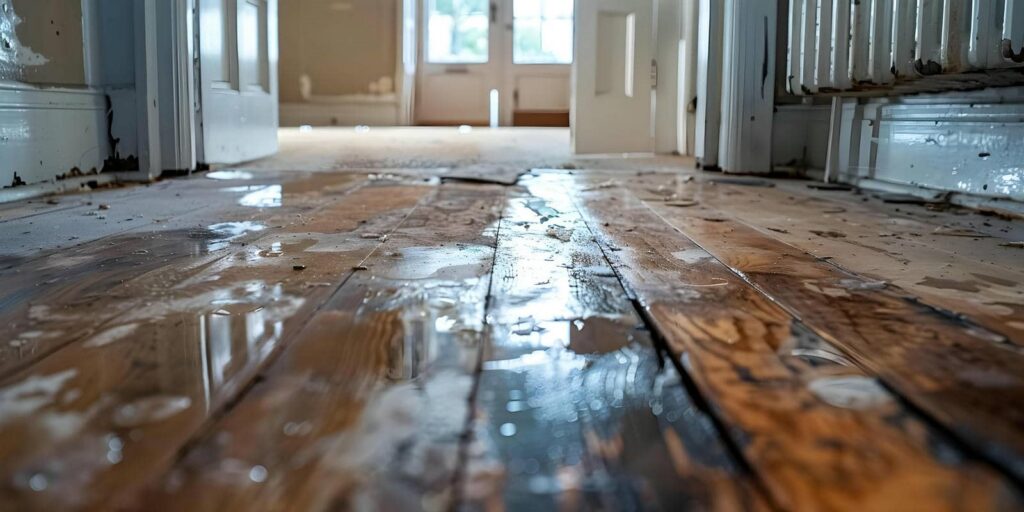
You should remove any standing water immediately with pumps, wet vacuums, or absorbent materials to reduce the moisture load.
Next, increase air circulation with fans and dehumidifiers so exposed surfaces dry faster and more evenly.
Make sure you also check hidden moisture in baseboards, wall cavities, and under flooring, since trapped water can still support mold growth.
Remove Standing Water
Act quickly to remove all standing water, since pooled moisture gives mold the chance to start growing within 24 to 48 hours. You should use pumps, wet vacuums, mops, and absorbent towels to clear floors, carpets, and low spots as soon as it’s safe.
Focus on hidden pockets under cabinets, behind appliances, and along baseboards, where water often lingers. Check structural materials carefully, because saturated drywall, insulation, and padding can hold moisture long after the surface looks dry.
Dispose of items that stay soaked and can’t be cleaned properly. You’re protecting your property and your team when you verify that no standing water remains. A thorough response now helps you stay ahead of mold and keeps your space on the right track.
Increase Air Circulation
Once standing water is gone, maximize air movement so damp materials dry quickly and mold can’t take hold. Open windows if outdoor air is dry, and run fans to push air across floors, walls, and furniture.
Keep interior doors open so each room shares airflow, and reposition portable equipment as surfaces start to dry. If you’ve got HVAC support, set it to circulate air without cooling the space too much.
Remove wet rugs, cushions, and lightweight items so they don’t block circulation. Aim airflow at cleanable, hard surfaces first, then rotate coverage.
Check that vents aren’t obstructed. You and your household can work together by keeping pathways clear and avoiding closed-off rooms.
Strong circulation shortens drying time, reduces odor, and helps your property recover with less risk.
Dry Hidden Moisture
Air movement helps visible surfaces dry, but moisture often lingers inside walls, under flooring, and behind trim where mold can spread unnoticed.
You need to verify hidden areas with a moisture meter, infrared camera, or careful inspection after removing baseboards, insulation, or damaged drywall. Don’t assume a surface feels dry means the assembly is dry.
Open cavities, lift carpet, and check subfloors, corners, and cabinet backs. Use dehumidifiers and targeted fans to pull moisture from enclosed spaces, and keep them running until readings return to normal.
If materials stay damp for more than 24 to 48 hours, replace them. When you dry hidden moisture thoroughly, you protect your property and keep your home’s environment safe for everyone inside.
Remove Damaged Materials Quickly
Remove soaked drywall, insulation, carpet, and other porous materials as soon as possible, because these items hold moisture and can support mold growth even after the visible water is gone.
You should act within the first 24 to 48 hours when possible, since delay gives spores a better chance to spread. Cut out visibly damaged sections far enough to reach clean, dry material, and bag debris before you move it through your property.
Wear gloves, a mask, and eye protection so you can work safely and stay focused. If you share the space with family, tenants, or coworkers, keep the area isolated while you clear it.
Quick removal helps you regain control, reduce odor, and protect the structure from avoidable hidden damage.
Disinfect Hard Surfaces Safely
You should choose a disinfectant that’s labeled for mold control and safe for the specific hard surface you’re treating.
Apply it exactly as directed, and keep the area ventilated while you work.
Afterward, wipe the surface clean and dry it thoroughly so moisture doesn’t remain and support new mold growth.
Choose Proper Disinfectants
Choose a disinfectant that’s labeled for hard, nonporous surfaces and effective against mold, then apply it only after you’ve removed standing water and dried the area as much as possible.
Check the product’s contact time, dilution ratio, and surface compatibility before you start. You should wear gloves and eye protection, and keep the space ventilated while you work.
If you’re treating shared areas, choose a product that fits your building’s materials and safety rules so your team stays protected and aligned.
Never mix disinfectants with bleach, ammonia, or other cleaners. Test the solution on a small hidden spot first to confirm it won’t damage finishes.
Follow the label exactly, because stronger doesn’t mean safer or more effective against mold on your property.
Wipe And Dry Thoroughly
Wipe hard, nonporous surfaces with clean disposable cloths or microfiber towels to lift residue, then dry them completely with fans, dehumidifiers, and good airflow.
You should work from the cleanest area toward the dirtiest so you don’t spread contamination. Replace cloths often, and don’t reuse anything that’s visibly soiled.
If you’re disinfecting, apply the product only after the surface is free of standing water. Keep the area open and ventilated until every surface feels dry.
- Target seams, corners, and fixture edges.
- Monitor humidity; keep it below 60%.
- Remove wet debris immediately.
- Protect your team with gloves and eye protection.
Keep Indoor Humidity Below 50
Keeping indoor humidity below 60% helps slow mold growth after water damage, so use a hygrometer to monitor levels and run dehumidifiers as needed.
You should check readings in rooms that held moisture most, since damp air can stay trapped there. Keep windows closed when outdoor humidity is high, and set HVAC fans to circulate air steadily.
Replace wet insulation, carpets, and padding quickly, because hidden moisture raises indoor moisture even after surfaces look dry. Empty dehumidifier tanks often, or connect a drain hose for continuous operation.
When you keep humidity in range, you protect finishes, reduce odors, and support a healthier home environment that everyone in your household can feel good about.
That consistency helps your team stay ahead of mold.
Call a Pro for Severe Water Damage
If water has soaked structural materials, spread into walls, or affected a large area, call a water damage restoration professional right away. You’ll need industrial drying, moisture mapping, and microbial control to stop mold before it starts.
A pro can inspect hidden cavities, remove unsalvageable materials, and verify that framing, insulation, and subfloors are dry. That protects your home and helps you stay part of a healthy, safe environment.
- Extract standing water fast
- Dry concealed spaces with specialty equipment
- Test moisture levels and document results
- Reduce contamination from sewage or mold spores
Don’t wait for odors, staining, or soft drywall. When damage is extensive, expert response saves time, limits repairs, and supports your recovery with confidence.
Summary
Act fast, and you can stop mold before it turns your property into a spore-soaked swamp. Dry every wet surface within 24 to 48 hours, remove ruined materials, disinfect hard areas, and keep humidity below 60%. If the damage is heavy, call a pro before hidden moisture spreads behind walls like an invisible wave. With swift action, fans, dehumidifiers, and good maintenance, you’ll protect your space and keep mold from staging a comeback.