

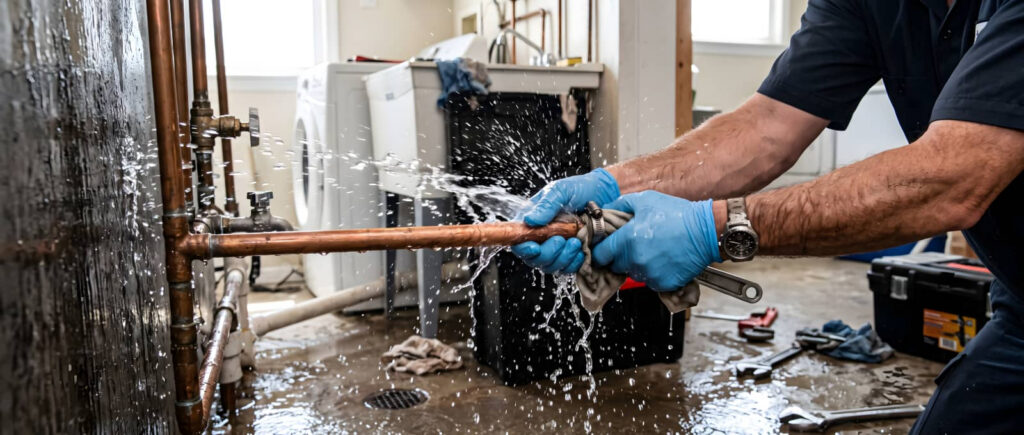
When a pipe bursts, you need to act fast to limit the damage. Water Damage From Burst Pipe situations should start with shutting off the main water valve, then cutting power to the affected area if water is near outlets or appliances. Move furniture and valuables out of the way, and use towels or buckets to control runoff. Once the flow slows, you can focus on locating the break and drying the area before mold has a chance to spread.
Key Takeaways
- Shut off the main water valve immediately to stop more water from flooding the area.
- Turn off electricity to affected rooms if water is near outlets, appliances, or the breaker panel.
- Move furniture, rugs, and electronics away from the leak to protect belongings from further damage.
- Use towels, buckets, fans, and a wet vacuum to remove standing water and speed drying.
- Call an emergency plumber right away and document the damage for repair and insurance claims.
Stop Burst Pipe Water Damage Fast
When a pipe bursts, you need to act immediately to limit water damage. Protect your home by moving furniture, rugs, and electronics away from the leak.
Use buckets, towels, or a wet vacuum to collect runoff and reduce spreading. If safe, dry standing water fast with fans and open windows for airflow.
Inspect nearby walls, baseboards, and flooring for moisture so you can catch hidden damage early. For how to stop water damage from a burst pipe, focus on isolating the wet area and removing absorbed water before it wicks deeper.
Wear gloves and non-slip shoes to stay safe while you work. Document damage with photos for your insurance claim, and stay alert so your crew can act as one.
Shut Off the Main Water Valve
Locate your main water valve quickly, since shutting it off is the first step to limit further damage.
Turn the valve clockwise until it stops to cut the water supply.
Then check that water flow has stopped at the burst pipe and nearby fixtures.
Locate Main Valve
If water is pouring from a burst pipe, you need to shut off the main water valve right away to stop the flow. Before an emergency hits, learn where that valve is so you can move fast with confidence.
In most homes, you’ll find it near the perimeter: the basement wall, crawlspace, utility closet, garage, or where the water line enters from outside. Look for a round wheel handle or lever on the main supply line.
If your home has a meter box, the valve may sit nearby. Keep the area clear so you can reach it without delay.
When you know the location, you’re better prepared to protect your home, limit damage, and act like part of a well-ready household.
Turn Valve Clockwise
Turn the main water valve clockwise until it stops to shut off the water supply and slow the burst pipe damage. Grip the handle firmly and rotate it in the closed direction; don’t force it past the stop.
If you’re using a wheel-style valve, turn it steadily with both hands for control. For a lever-style valve, move the lever a quarter turn until it aligns perpendicular to the pipe.
Stay calm and keep your movements deliberate so you don’t crack fittings or strain the stem. This quick action protects your home and helps your household work as a team under pressure.
After the valve is closed, leave the area clear so you can handle the next repair step safely and efficiently together.
Confirm Water Stops
Check the burst pipe and nearby fixtures to confirm the water flow has stopped after closing the main water valve.
Watch the leak point, faucets, toilets, and appliances for any drip or spray. If water still runs, the valve may not be fully shut, or another supply line may feed the area.
Turn the valve farther clockwise, then test again. You can also open a cold faucet at the lowest point in the home to relieve pressure and verify the line is dry.
Listen for hissing, feel for vibration, and inspect exposed pipes.
Once flow stops, place a bucket under any residual drip and protect nearby flooring. Your quick check keeps you in control and helps your household avoid more damage together.
Cut the Power and Drain Pipes
Before you move through the flooded area, cut power to the affected circuit at the breaker panel to reduce the risk of electrocution. If you can’t confirm which breaker feeds the wet space, shut off the main.
Don’t touch outlets, switches, or appliances in standing water. After the power’s off, open the lowest faucets in the home and flush toilets to relieve pressure. This helps drain the supply lines and limits additional leakage from the burst pipe.
If you have a basement or utility sink, place a bucket under open drains to catch runoff. Keep valves and hose bibs open until the flow stops.
Work methodically, and stay clear of soaked wiring. You’re protecting your home and everyone in it by reducing electrical and water hazards fast.
Move Belongings and Cover Floors
Move valuables out of the water’s path immediately to limit loss and contamination.
Cover floors with towels, plastic sheeting, or tarps to slow absorption and protect finished surfaces.
Keep clear pathways so you can move safely and continue cleanup without spreading damage.
Move Valuables Quickly
Act fast to protect items that can absorb water or stain easily. You need to clear the area before moisture spreads into boxes, rugs, and fabric.
Lift valuables with both hands, keep them close to your body, and move them to a dry room. Group similar items together so you can track them without confusion. If you’re working with family or roommates, assign one person to carry, one to sort, and one to watch for leaks.
- Photo albums stacked on a shelf
- Laptops wrapped in a towel
- Documents sealed in a plastic bin
- Shoes lined beside a doorway
Check pockets, drawers, and low cabinets for small items. Keep electronics unplugged and away from standing water.
Every minute counts, so stay organized and work together.
Protect Floors Fast
Protect floors immediately by pulling dry rugs, boxes, and lightweight furniture out of the wet area, then laying down plastic sheeting, tarps, or thick towels to block spreading water. You’ll protect wood, vinyl, and carpet backing from soaking while you work.
If water’s still moving, overlap the covering at seams and weight edges with clean objects so runoff can’t slip underneath. Keep absorbent materials flat, not bunched, so they pull moisture evenly.
Check for hidden pooling under furniture feet and along baseboards, where damage often starts. If you’re part of a household team, assign one person to lift and one to cover so everyone moves fast and stays coordinated.
This simple routine keeps your space safer and helps your crew feel in control.
Create Clear Pathways
Clear pathways before the water spreads farther by moving boxes, chairs, electronics, and other loose items out of the affected area.
You’ll work faster when you can move without stepping around hazards, and your team can help without crowding the space. Roll up rugs, lift curtains, and shift small furniture to a dry room.
Then cover exposed floors with plastic sheeting or clean towels to reduce slip risk and protect finishes.
- Stack dry boxes away from the leak.
- Carry electronics to a safe shelf.
- Fold rugs and place them in bags.
- Lay towels along the water’s edge.
Keep walkways open so you can check the pipe, shut off valves, and dry the room efficiently.
Find the Burst Pipe and Contain It
Once you’ve shut off the main water supply, trace the leak to find the burst pipe and limit the spread.
Check ceilings, walls, crawl spaces, and under sinks for dripping, spraying, or damp spots. If the pipe is visible, place a bucket, pan, or towels beneath the break to catch runoff.
If water is still escaping, wrap the area with a rubber patch, pipe clamp, or heavy tape as a temporary seal. Move nearby electronics, rugs, and valuables away from the wet zone so you protect what matters and keep your space manageable.
If the pipe is hidden, mark the wet area and listen for hissing to locate the source.
Work steadily, stay safe, and focus on containing the leak before it grows.
Dry the Area Before Mold Starts
After you’ve contained the leak, dry the area as fast as possible to reduce mold growth and further material damage.
You’ll protect your home and keep your space feeling livable when you move quickly and methodically.
Pull up wet rugs, lift cushions, and open cabinet doors so air can reach hidden moisture.
Run fans to push air across floors and walls, and use a dehumidifier to pull water from the room.
If you can, increase airflow with open windows when outdoor humidity is low.
- Damp baseboards
- Water-darkened drywall seams
- Wet carpet edges
- Fogged windows and sticky floors
Call an Emergency Plumber
Call an emergency plumber as soon as you’ve stopped the immediate flow and started drying the area. You need a licensed pro to isolate the break, check for hidden line damage, and confirm the system is safe to restore.
Give the plumber clear details: where the pipe failed, what you shut off, and whether water reached walls, flooring, or electrical outlets. That helps the crew arrive with the right tools and parts.
If you’re part of a home or property team, keep everyone updated so no one reopens the line early. A fast response reduces structural damage, limits mold risk, and protects your plumbing system.
Stay nearby, document the damage, and follow the plumber’s instructions until repairs are complete and water pressure returns.
Frequently Asked Questions
How Do I Tell if a Pipe Is Frozen Before It Bursts?
Check for reduced water flow, frost on exposed pipes, bulges, and strange noises. Feel the pipe for extreme cold. If you spot any, shut off water and warm the area gently right away.
Will My Homeowners Insurance Cover Burst Pipe Water Damage?
You’ll usually get coverage if you acted reasonably and the pipe burst from a sudden event; insurers often deny slow leaks or neglect. Check your policy, document damage, and call your agent right away.
How Can I Temporarily Patch a Leaking Pipe Safely?
You can temporarily patch a leaking pipe safely with epoxy putty, self-fusing silicone tape, or a rubber clamp sleeve. Dry the area, shut off water, and press the repair tight before restoring pressure.
What Signs Show Hidden Moisture After the Flooding Stops?
You’ll notice hidden moisture by musty odors, swollen drywall, peeling paint, damp insulation, warped floors, and discoloration. Check baseboards, corners, and subfloors with a moisture meter; if readings stay high, you’ve still got trapped water.
When Should I Replace Damaged Drywall After Pipe Water Damage?
Replace damaged drywall as soon as you confirm it’s soaked, warped, or moldy. You should cut out wet sections within 24–48 hours, then dry framing fully before installing new boards to protect your home’s integrity.
Wrap-Up
When a pipe bursts, act like you’re sealing a crack in a dam—every second counts. You’ll protect your home fastest if you shut off the main valve, cut power to wet areas, and move anything valuable out of the flood path. Then you can contain the leak, dry the space, and call an emergency plumber. Don’t let a small rupture become a swollen tide; your quick response stops damage before it spreads.