
You probably don’t realize that water damage crews often map hidden moisture before they dry anything. You’ll see water extractors removing standing water, then air movers pushing airflow across wet surfaces. Dehumidifiers pull moisture from the air, while heaters can speed evaporation. Moisture meters and thermal cameras guide placement, and HEPA scrubbers plus antimicrobial sprayers help control air quality and mold risk. The exact setup can change fast.
Key Takeaways
- Air movers, dehumidifiers, and heaters speed drying by circulating air, lowering humidity, and raising surface temperatures.
- Water extractors, including portable and truck-mounted units, remove standing water quickly to limit saturation.
- Moisture meters and thermal cameras detect hidden damp areas and verify when materials are fully dry.
- HEPA air scrubbers and antimicrobial sprayers help improve air quality and reduce mold growth during cleanup.
- Plastic barriers and proper equipment placement create containment and improve drying efficiency throughout restoration.
Water Damage Cleanup Equipment Used by Pros
Professional water damage cleanup starts with the right equipment, and pros use tools that remove water, dry materials, and control moisture fast.
When you ask what equipment is used in water damage cleanup, you’ll see air movers, dehumidifiers, moisture meters, thermal cameras, HEPA air scrubbers, and antimicrobial sprayers.
You use air movers to push wet air off surfaces, and dehumidifiers to pull moisture from the room.
Moisture meters help you track hidden dampness in walls, floors, and framing.
Thermal cameras spot cool, wet areas before you tear anything out.
Air scrubbers improve air quality during cleanup, so your crew can work in a healthier space.
With the right setup, you stay efficient, protect materials, and work like part of a skilled restoration team.
Water Extractors Remove Standing Water
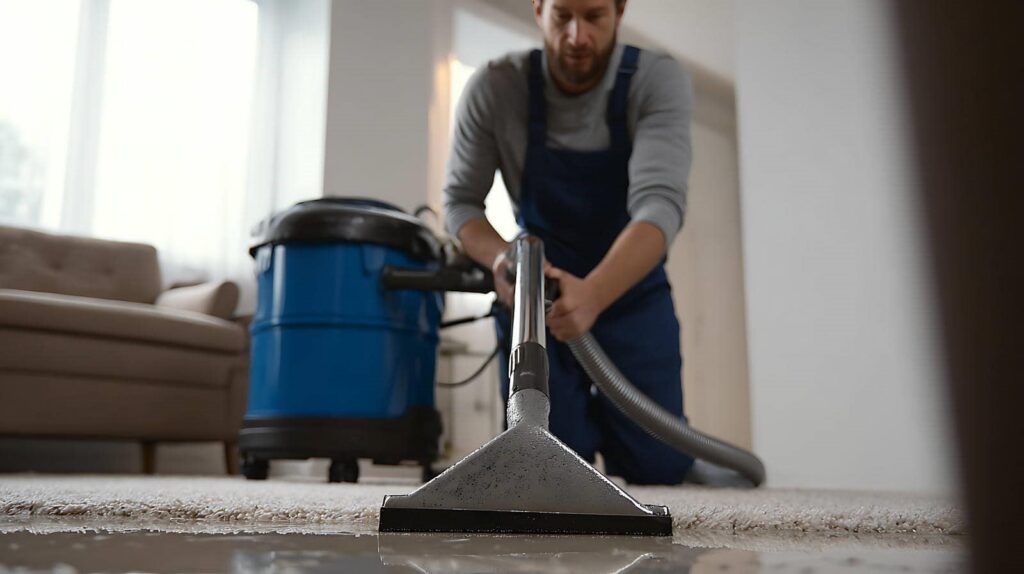
You use portable water extractors to remove standing water from floors, carpets, and tight spaces quickly.
For larger losses, truck-mounted extraction systems deliver higher suction and faster recovery rates.
Fast standing water removal helps limit material saturation and speeds the drying process.
Portable Water Extractors
Portable water extractors remove standing water fast, reducing further damage and speeding the drying process. You’ll use them to pull water from carpets, hard floors, and padded surfaces where towels can’t keep up. Their vacuum and pump systems help you work efficiently, so your team stays in control during cleanup.
Choose a unit with strong suction.
Empty the recovery tank often.
Move methodically across wet areas.
Check hoses, filters, and seals before use.
You’ll get better results when you match the tool to the material and moisture level. That keeps your jobsite safer, your drying plan tighter, and your crew working like a pro.
Portable extractors also help you reduce odors and limit secondary damage.
Truck-Mounted Extraction Systems
Truck-mounted extraction systems move large volumes of standing water fast, making them ideal for flooded basements, multi-room losses, and heavy saturation.
You connect the hose, position the wand, and let the unit pull water into a tank with strong vacuum power. That setup helps you recover more moisture from carpet, pad, and hard surfaces than smaller tools can handle.
You also benefit from longer hose runs, so you can work from outside the affected area and reduce traffic through wet spaces.
These systems typically pair with heated extraction and efficient discharge controls, giving your team a reliable way to stabilize the structure.
When you’re managing a serious loss, this equipment helps you work efficiently, protect materials, and keep your crew moving with purpose.
Fast Standing Water Removal
After the bulk water is moving out with high-capacity systems, water extractors help you remove the remaining standing water fast from floors, carpets, and hard surfaces.
You get better control, less spread, and faster drying starts, so your crew stays in sync and your space feels handled. Use them to reach edges, seams, and low spots where water hides.
Pull residual water from carpet fibers.
Lift moisture from tile and vinyl.
Reduce slip hazards right away.
Speed up drying and dehumidification.
You’ll see stronger results when you make repeated passes and overlap strokes. Clear extraction also limits wicking, protects materials, and helps you move to cleanup with confidence.
Air Movers Speed Up Drying
Air movers push a high volume of air across wet floors, walls, and contents to speed evaporation after water damage. You place them where airflow reaches the broadest wet surfaces, then angle the stream to break up boundary layers and lift moisture faster.
In a proper setup, you’ll space units so each one overlaps the next, avoiding dead zones behind furniture, baseboards, and corners. You can also raise small items on blocks so air can circulate underneath.
Keep cords managed, vents clear, and pathways safe for your team. When you use air movers correctly, you shorten drying time, reduce lingering dampness, and keep the restoration area moving toward normal.
They’re a core tool in any crew’s drying plan.
Dehumidifiers Pull Moisture From Air
Dehumidifiers pull moisture out of the air so the room can dry faster after water damage. You place them after standing water’s gone, and they keep relative humidity low enough for materials to release trapped moisture. That helps you protect drywall, trim, and flooring while reducing musty odors and microbial risk.
You set the unit where air can circulate freely.
You empty or drain the reservoir as directed.
You close doors and windows to keep conditioned air in.
You run it continuously until the space feels stable.
When you use the right unit, you’re not guessing—you’re following a proven drying plan with the team beside you.
Heaters and Moisture Meters Help Drying
Heaters speed evaporation by warming surfaces and improving airflow, while moisture meters verify which materials are actually dry. You place portable heat units to raise surface temperature, and you aim the warm air across wet framing, subfloors, or drywall.
That lets moisture move out faster, especially when dehumidifiers are already pulling vapor from the room. You don’t guess at progress; you check readings with pin or pinless meters and compare them to unaffected areas.
When numbers match, you know the material has reached a safe drying point. This approach keeps you aligned with the team’s plan, reduces wasted runtime, and helps you stay confident that each area is drying on schedule.
Good monitoring also lets you move equipment where it’s needed most.
Tools Pros Use to Prevent Mold
To prevent mold during water damage cleanup, you use antimicrobial sprayers, HEPA air scrubbers, and fast-drying containment tools to control spores before they spread.
You’ll also rely on disciplined prep and a tight workflow that keeps your team aligned and your space protected.
Apply EPA-registered antimicrobials to damp surfaces.
Run HEPA scrubbers to capture airborne spores.
Seal work zones with plastic barriers and negative pressure.
Remove wet materials quickly and bag debris.
You check hidden cavities, protect clean areas, and keep humidity low while you work.
That steady, methodical approach helps you stay in control and gives everyone on site confidence.
When you use these tools together, you reduce mold risk and support a safer cleanup for the whole crew.
How Cleanup Equipment Speeds Restoration
Once you’ve controlled mold risk with containment and air scrubbing, the same cleanup setup helps the drying phase move faster. You use high-capacity extractors to remove standing water, then place air movers to push dry air across wet surfaces.
Dehumidifiers pull moisture from the air, which lowers humidity and speeds evaporation from walls, floors, and framing. Moisture meters guide your next move, so you don’t waste time drying already-safe materials.
Thermal imaging can reveal hidden damp zones before they cause delays. With the right layout, you shorten drying time, reduce demolition, and protect structural materials.
That means you’re not just fixing damage—you’re restoring your space with a team that works efficiently, communicates clearly, and gets everyone back to normal sooner.
Frequently Asked Questions
How Quickly Should Water Damage Cleanup Begin After Flooding?
You should begin water damage cleanup immediately, ideally within 24 hours of flooding. You’ll limit mold growth, material swelling, and structural deterioration when you act fast, document damage, and start drying right away.
What Signs Mean Hidden Water Damage Is Still Present?
You’ll spot hidden water damage if you notice musty odors, warped flooring, bubbling paint, recurring stains, or damp drywall. Like a lantern in a cellar, a moisture meter confirms trapped water before mold spreads.
Can Contaminated Water Be Cleaned With Standard Equipment?
No, you can’t safely clean contaminated water with standard equipment. You need PPE, containment, antimicrobial agents, and specialized extraction and drying gear. You’ll protect your team and avoid spreading hazards or recontaminating restored areas.
When Should Contents Be Removed Before Drying Starts?
Like a triage nurse, you should remove contents before drying starts when they’re wet, contaminated, or blocking airflow. You’ll speed drying, protect belongings, and reduce mold risk. Move salvageable items fast, then document everything.
How Do Professionals Decide if Materials Need Replacement?
You decide replacement by checking saturation, contamination, structural integrity, and drying response. If materials stay warped, delaminate, mold, or hold sewage, you replace them. Professionals use moisture meters, inspections, and restoration standards to guide you.
Conclusion
When you clean up water damage, you’re like a skilled captain steering a flooded ship back to shore. You use water extractors to clear the deck, air movers to push wind through the hull, and dehumidifiers to pull hidden moisture from the air. Moisture meters and thermal cameras help you find what’s unseen, while HEPA scrubbers and antimicrobial sprayers protect the cargo. With the right tools, you don’t just dry a space—you restore it.