

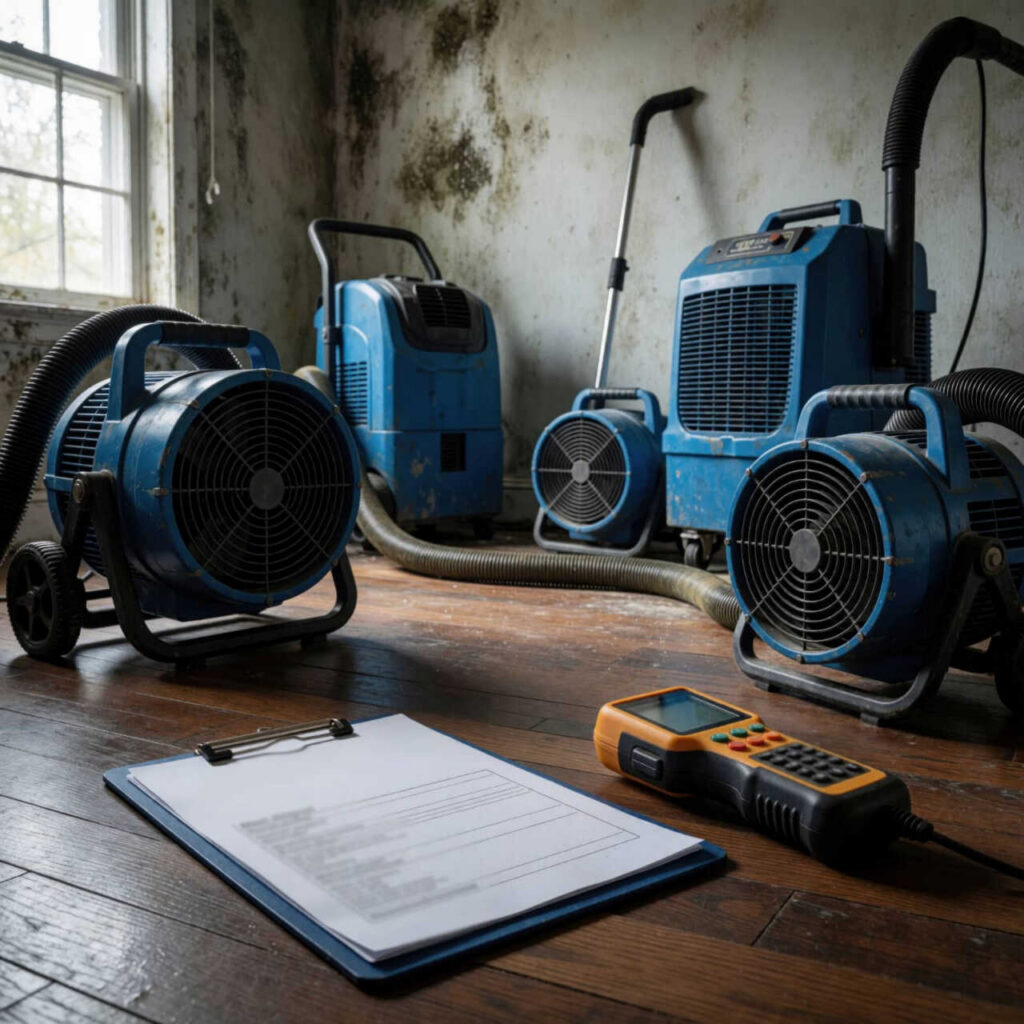
Like a storm after a calm sky, water extraction costs can shift fast, and you’re usually looking at about $1,000 to $4,000. Your final price depends on how much water you’re dealing with, how deep it’s spread, and how quickly you call. Labor, equipment, contamination, and emergency timing can push the bill higher. The real question is which of those factors matters most in your case.
Key Takeaways
- Water extraction services typically cost $1,000 to $4,000, depending on water volume, damage extent, and response urgency.
- Smaller leaks cost less, while prolonged standing water or multiple affected rooms increase labor and equipment needs.
- Severe flooding raises prices because deeper saturation affects subfloors, walls, and hidden spaces, requiring longer drying and cleanup.
- Emergency calls, tight access, contaminated water, and specialized equipment like truck-mounted pumps can add significant premiums.
- Insurance coverage, itemized quotes, disposal charges, and antimicrobial treatments all affect your out-of-pocket cost.
How Much Do Water Extraction Services Cost?
Water extraction services usually cost between $1,000 and $4,000, though the final price depends on how much water you need removed, how quickly you need service, and the extent of the damage.
For most jobs, you’ll see the cost of water extraction services fall in the middle of that range, especially when crews can act fast and limit spread. You can expect a higher quote if water has soaked multiple rooms or if standing water remains for hours.
Smaller incidents, like a localized leak, often sit near the low end.
When you compare estimates, you’re not just buying equipment; you’re buying speed, labor, and a cleaner path back to normal. That helps you make a clear, confident choice.
What Drives Water Extraction Costs?
You’ll usually see extraction costs rise as water damage gets more severe, because deeper saturation affects more materials and increases labor time.
Your equipment needs also matter: larger losses often require industrial pumps, air movers, and dehumidifiers, which push pricing higher.
In practice, the final cost tracks the volume of water, the affected area, and the equipment needed to remove it efficiently.
Water Damage Severity
When damage is minor, extraction costs stay lower. But once water reaches walls, flooring, insulation, or structural cavities, labor, equipment, and drying time all increase quickly. You’ll usually see pricing rise with the spread, depth, and contamination level of the water. In practical terms, severity changes the job scope and the total bill.
Surface-only water: faster, cheaper removal.
Wet materials: more demolition and cleanup.
Hidden moisture: longer drying and monitoring.
Structural impact: higher repair coordination.
If you catch the issue early, you’re more likely to stay in the lower-cost range and protect your space.
When you act with your neighbors in mind, you’re also helping the whole property recover faster, safer, and with fewer surprises.
Extraction Equipment Needs
Extraction costs also climb with the type and amount of equipment needed to remove water efficiently.
If you’re dealing with a small room, a single pump and a few air movers may do the job. Larger losses often need truck-mounted extractors, weighted tools, dehumidifiers, and moisture meters, which raises labor and rental costs.
You also pay for setup, repositioning, and monitoring, especially when water has spread under flooring or into walls. Fast-response teams can reduce secondary damage, but they’ll use more gear to do it.
In practice, more equipment usually means a higher invoice, yet it can lower total loss by shortening drying time and limiting repairs.
When you understand the equipment mix, you can compare quotes with confidence and feel part of a smarter recovery plan.
How Damage Severity Changes Cost
Damage severity is one of the biggest drivers of water extraction cost because it directly affects labor, equipment time, and drying requirements.
When you compare quotes, you’ll usually see higher charges as damage moves from light surface water to deep saturation. You’re not paying for the same response in every case.
Minor leaks often stay localized and cost less.
Moderate damage spreads farther, increasing drying time.
Severe flooding can affect subfloors, walls, and hidden spaces.
Longer exposure usually raises the final bill.
If you act quickly, you can keep costs closer to the lower range and protect your space.
You’re part of a group of property owners who save money by spotting severity early and responding fast.
How Equipment and Labor Affect Cost
Beyond damage severity, equipment and labor can swing your water extraction bill considerably.
You’ll usually pay more when crews need truck-mounted pumps, high-capacity vacuums, or low-grain dehumidifiers, because these tools move water faster and handle deeper saturation.
Specialized meters, air movers, and thermal imaging also add cost when technicians need precise mapping.
Labor matters just as much: larger jobs require more technicians, longer shifts, and tighter coordination, which raises hourly charges.
If your property has multiple rooms, tight access, or contaminated water, the team spends more time setting up and cleaning up.
You can lower surprises by asking what equipment they’ll use, how many people they’ll send, and whether the estimate includes setup, monitoring, and teardown.
How Insurance Affects Water Extraction Costs
Insurance can considerably reduce your out-of-pocket water extraction cost, but coverage depends on the source of the water and the cause of the loss. You’ll usually pay less when a covered peril triggers the damage, and you can expect your policy to shape the final bill.
Sudden leaks often qualify for partial or full reimbursement.
Flood water usually needs separate coverage.
Sewage backups may require an endorsement.
Deductibles decide what you still owe.
Your adjuster may also limit payment to reasonable extraction and drying costs, so documentation matters. Save photos, invoices, and moisture readings to support your claim.
When you know your coverage, you can plan smarter, protect your budget, and feel more confident with your restoration team.
Why Emergency Water Extraction Costs More
Emergency water extraction usually costs more because crews must respond immediately, often after hours, which increases labor rates and mobilization fees.
You’re paying for rapid dispatch, specialized equipment, and a team that can stabilize damage before it spreads. In many cases, moisture keeps moving through flooring, drywall, and insulation, so every hour adds measurable risk and potential repair cost.
Emergency work also demands more coordination, including truck readiness, fuel, and on-call staffing, all of which raise pricing.
When you need help fast, you’re buying speed and reduced loss, not just extraction. If you’re facing a sudden leak or flood, acting quickly can save your property and help you stay in control with your community.
How to Compare Water Extraction Quotes
When you compare water extraction quotes, check the service scope line by line so you know exactly what’s included, from water removal to drying and cleanup.
Ask for a pricing breakdown that separates labor, equipment, materials, and any emergency or after-hours fees. This lets you compare bids on equal terms and spot hidden costs fast.
Service Scope Details
Before you compare water extraction quotes, line up the exact service scope each contractor includes: extraction depth, affected-square-foot estimate, equipment count, drying timeline, moisture readings, antimicrobial treatment, and disposal fees.
You’ll compare apples to apples faster when you verify each item in writing. Ask for:
- A defined extraction area, not a vague room count.
- Measured moisture targets and the testing method used.
- The number of air movers, dehumidifiers, and technicians assigned.
- Start-to-finish drying steps, including monitoring visits.
When scope matches, you can spot omissions that hide risk. A quote that sounds lower may simply leave out critical work.
Stay with providers who spell out each task clearly; that transparency helps you feel informed, included, and ready to choose with confidence, together.
Pricing Breakdown Factors
Once you’ve confirmed the service scope, compare the line items that actually drive price: extraction labor, equipment rental, drying time, disposal, antimicrobial treatments, access difficulty, and after-hours response.
You should see each quote itemized, because lump sums hide cost differences. Higher labor usually means more technicians or longer onsite hours. Equipment costs rise when crews use large pumps, air movers, dehumidifiers, or moisture meters for longer periods.
Drying time affects total billable days, so ask how providers measure completion. Disposal and antimicrobial charges should reflect contaminated water class and material removal volume.
Tight crawl spaces, upper floors, and emergency calls often add premiums. When you compare identical categories, you’ll spot the best value and feel confident you’re choosing a team that fits your budget and your home.
Frequently Asked Questions
How Quickly Should Water Extraction Start After Flooding?
You should start water extraction within 24 hours, ideally immediately. Every hour increases seepage, mold risk, and structural damage. Acting fast helps you protect your home, reduce losses, and stay ahead together.
Does Mold Testing Add to Water Extraction Costs?
Yes, mold testing usually adds to your bill, since you’re paying for inspection, lab analysis, and reporting. Think of it as insurance against hidden damage: the extra cost’s modest, but it can guide smarter remediation decisions.
Can I Stay in My Home During Water Extraction?
Usually, you can stay home if the damage is contained, but you’ll need to avoid wet areas. Your technician’ll assess safety, humidity, and equipment placement, then tell you if relocation’s necessary.
Are Basement Extractions Priced Differently Than Other Areas?
Yes, basement extractions’re often priced higher: you’re paying for access, pumping, and moisture control. If your basement floods after a storm, you’ll likely see more labor and equipment than in a hallway.
What Should I Do Before the Extraction Team Arrives?
You should clear access paths, move valuables, and shut off electricity if safe. Document damage with photos, then keep children and pets away. These steps help your team work faster and protect your belongings.
Final Thoughts
When you’re weighing water extraction costs, you’re really balancing speed, damage, and complexity. Small leaks may stay near the low end, while deep flooding can push prices higher like a tide rising after a storm. You’ll usually save more by acting fast, comparing detailed quotes, and checking insurance coverage. The longer water lingers, the more it spreads, and the more your final bill grows. Smart decisions now can keep costs from flooding your budget.