
When water damage hits, you need more than a quick mop-up. Water extraction services first stop the source, assess the spread, and remove standing water with pumps and wet vacuums. Then they check hidden moisture with thermal tools and meters, because what you can’t see can still damage walls, floors, and air quality. The real question is how fast they can dry the structure before the next problem starts.
Key Takeaways
- Technicians first stop the water source, inspect damaged areas, and document moisture levels to assess the cleanup scope.
- They remove standing water with pumps and wet vacuums, clearing debris and checking hidden pockets for remaining moisture.
- Moisture mapping tools like thermal imaging and meters locate trapped water behind walls, floors, and other concealed spaces.
- Air movers and dehumidifiers then speed drying, reduce humidity, and help prevent mold growth and material deterioration.
- Fast extraction also protects metal, wiring, and appliances, improving indoor air quality and lowering repair costs.
What Water Extraction Services Do First
When water extraction services arrive, they first stop the source of water if it’s still active, then assess the affected areas to gauge the extent of the damage.
You’ll usually see technicians document moisture levels, inspect floors, walls, and contents, and identify safety concerns before any cleanup starts.
That early evaluation shows how water extraction services work in a structured way: they prioritize control, measurement, and planning.
You’re part of the process because clear communication helps the crew protect your property and reduce delays.
They may also map where water has spread so they can target high-risk zones and prevent hidden damage.
Fast action matters, and their first steps set up efficient restoration, giving you a clearer path back to normal.
How Technicians Remove Standing Water
You’ll see technicians start by pumping out standing water to remove the bulk of the moisture fast.
Then they use wet vacuums to pull water from floors, carpet, and hard-to-reach edges.
After extraction, they take rapid moisture checks to confirm what’s left and guide the next drying steps.
Pumping Out Water
Technicians pump out standing water with high-capacity submersible or truck-mounted extraction equipment, depending on how much water has collected and how accessible the affected area is.
You’ll see them place hoses at the lowest points first so water moves out quickly and evenly. They monitor flow, suction, and discharge routes to keep the process controlled and prevent backflow.
If debris is present, they clear it before pumping to protect the equipment and maintain steady removal. You benefit from this fast action because it lowers moisture levels, reduces structural stress, and helps your space feel like it’s back under control.
The team also checks hidden pockets around baseboards, cavities, and drains so no standing water gets left behind.
Wet Vacuums
Wet vacuums handle the final layer of standing water after the bulk of the water has been pumped out. You’ll see technicians use them on floors, inside cabinets, and around low spots where pumps can’t reach.
The machine draws water through a hose and stores it in a recovery tank, letting the crew lift thin puddles without spreading them. Technicians switch nozzles to match carpet, tile, or hard surfaces, and they work in overlapping passes so no residue stays behind.
This step helps your space feel controlled again and keeps moisture from lingering under edges or trim. When the surface looks clear, the team can move on with confidence, knowing the room’s ready for the next phase of cleanup together.
Rapid Moisture Checks
Before extraction begins, crews perform rapid moisture checks to map where water has migrated and how much remains trapped in surfaces and materials. You’ll see technicians use pin meters, infrared cameras, and surface probes to confirm what you can’t see. This quick survey guides every pass of the extraction equipment and helps your team act with confidence.
They test flooring edges, baseboards, and subfloors.
They compare readings across dry and wet zones.
They identify hidden saturation behind walls and cabinets.
They mark priority areas for immediate standing-water removal.
With those numbers, you know where water’s deepest and which materials need urgent attention. That shared picture keeps cleanup efficient, reduces secondary damage, and helps you feel included in each step of the recovery process.
Why Moisture Detection Comes Next
Once technicians remove standing water, you still need moisture detection to find hidden dampness behind walls, under flooring, and inside structural cavities.
They use mapping tools and meters to pinpoint trapped moisture that you can’t see on the surface. This step helps you prevent secondary damage like mold growth, swelling, and material deterioration.
Hidden Moisture Mapping
After the visible water is removed, technicians map hidden moisture to find where water has spread inside walls, floors, and insulation. You’ll see them use meters and thermal imaging to build a precise moisture profile, so you’re not guessing about what’s wet. This step gives your crew a shared plan and helps you feel confident in the next move.
- Read surface temperatures with infrared tools
- Pinpoint damp materials with pin meters
- Check cavities behind drywall and baseboards
- Record moisture levels for each zone
When you understand the full moisture path, you can coordinate drying equipment where it’s needed most. That keeps the response organized, protects your property, and helps your team work together with clear direction and trust.
Preventing Secondary Damage
Moisture detection comes next because water that looks removed can still keep damaging materials from the inside. You need this step to stop secondary damage like swelling, warping, delamination, and microbial growth.
Your technician checks subfloors, drywall, insulation, and trim with meters and thermal imaging, then verifies whether trapped moisture remains in hidden cavities. When readings stay high, you’ll know extraction alone wasn’t enough, and you can move quickly to drying and containment.
That protects your structure, your belongings, and your timeline. It also helps you stay confident that your home or business is being restored, not just dried on the surface.
When your team catches moisture early, you avoid bigger repairs, lower costs, and feel supported through the cleanup process.
Water Extraction Equipment Used on the Job
Water extraction services rely on specialized equipment to remove standing water quickly and limit additional damage. You’ll usually see:
- Truck-mounted extractors for high-volume removal
- Submersible pumps for deeper pooling
- Weighted wand vacuums for carpets and pads
- Portable extraction units for tight spaces
You benefit when the crew matches the tool to the surface, because that improves speed and reduces structural stress.
The team will also use crevice attachments to pull water from edges, and they’ll empty tanks often to keep suction strong.
If you’re on-site, you can expect clean hose routing, careful handling around furnishings, and clear communication about what’s being removed.
That’s how you stay informed and confident while the job moves forward efficiently.
How Drying and Dehumidifying Finish the Job
Once the standing water is gone, drying and dehumidifying finish the job by pulling residual moisture out of materials, cavities, and the air.
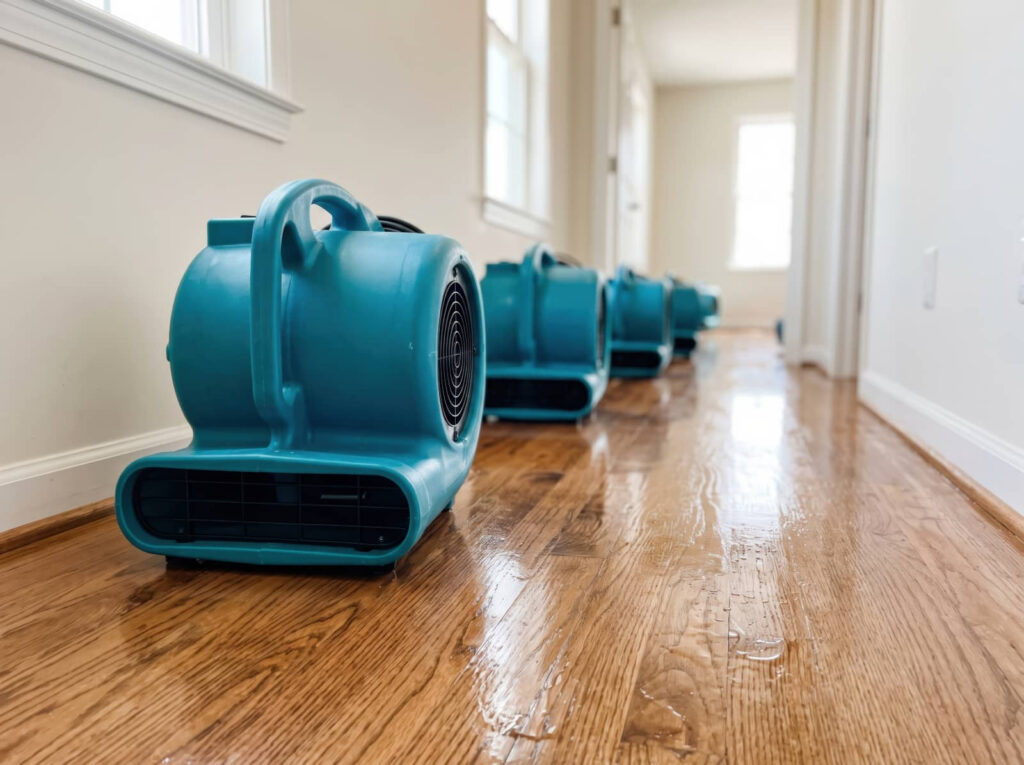
You’ll see air movers placed to speed evaporation across floors, walls, trim, and contents, while dehumidifiers capture that moisture and lower relative humidity.
Technicians often open hidden spaces, like wall cavities or under cabinets, so airflow can reach trapped dampness. They also monitor moisture levels with meters and adjust equipment until readings drop into the target range.
This controlled drying helps your space return to normal conditions in a predictable way.
When the setup runs correctly, you can trust that the affected area is being restored with care, precision, and a process that keeps you informed along the way.
Why Fast Water Extraction Prevents Bigger Damage
Fast extraction matters because the longer standing water sits, the more it can seep into flooring, drywall, insulation, and structural materials.
You reduce risk by acting fast, because moisture spreads through capillary action and keeps feeding hidden damage. When you respond quickly, you protect your home and join the group of owners who stop problems early.
You limit swelling and warping in wood and laminate.
You slow mold growth by removing the moisture source.
You reduce corrosion in metal fasteners, appliances, and wiring.
You make drying equipment work faster and more effectively.
That speed also helps preserve indoor air quality and lowers repair costs. Fast water extraction gives you a cleaner, safer path forward.
Frequently Asked Questions
How Long Does Water Extraction Usually Take?
Water extraction usually takes 1 to 3 hours, but you might need longer if flooding is severe or access is limited. You’ll get faster results when you call trained technicians right away.
Are Water Extraction Services Available for Sewage Backups?
Yes, you can get water extraction services for sewage backups—why wait? You’ll need fast removal, disinfection, and drying to protect your space and your team. They’ll handle contaminated water safely and reduce further damage.
Can Furniture Be Saved After Water Damage?
Yes, you can often save furniture if you act quickly, dry it thoroughly, and inspect for swelling, mold, or structural damage. You’ll preserve more by removing water fast and prioritizing professional drying.
Do I Need to Leave My Home During Extraction?
Usually, you don’t need to leave, but you should if crews shut off utilities, use strong drying equipment, or find contamination. You’ll stay safer and help restoration work faster when you follow their instructions.
Will My Insurance Cover Water Extraction Costs?
Your insurance may cover water extraction costs if your policy includes sudden water damage. You should review exclusions, document damage, and file quickly. A restoration company can often help you submit your claim.
Wrap-Up
When you act fast with water extraction services, you give your property the best chance to recover with minimal fuss. Technicians quickly remove standing water, check for hidden moisture, and set up drying equipment to handle what’s left behind. This practical process helps you avoid bigger headaches like mold, warped materials, and lingering odors. With prompt cleanup, you keep the damage in check and move your space back toward normal sooner.