

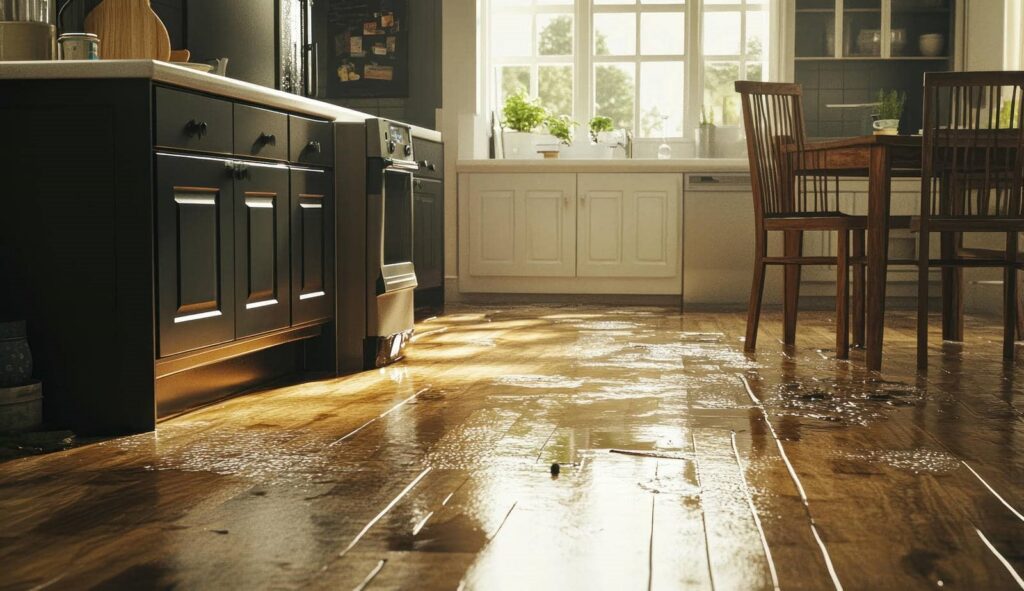
After flooding, you need to move methodically: cut power, shut off gas and water, then protect yourself with gloves, boots, and a mask. Next, remove standing water fast and start drying with airflow and dehumidifiers. From there, you can assess each room, salvage what’s clean, and discard what’s contaminated. The real question is how much you can safely recover before damage turns permanent. This article will tell you how to handle water damage cleanup after flooding.
Key Takeaways
- Shut off electricity, gas, and water if safe, then wear boots, gloves, and a respirator before entering the flooded area.
- Remove standing water quickly using a pump, wet vac, or buckets, and improve airflow with open windows, fans, or dehumidifiers.
- Clean room by room from top to bottom, scrubbing hard surfaces with detergent, rinsing, and drying to prevent recontamination.
- Sort and clean salvageable belongings by material, wash nonporous items, and discard moldy, swollen, or sewage-contaminated items.
- Call water damage professionals if flooding is extensive, contaminated, or moisture cannot be controlled within 24 to 48 hours.
How to Stay Safe During Flood Cleanup
Before you start cleaning up flood damage, make safety your first priority.
Before you enter, shut off electricity, gas, and water if you can do so safely. Wear boots, gloves, and a respirator if mold, sewage, or dust is present.
Check floors for sagging, loose boards, and hidden holes before you step. Keep children and pets out of the area, and work with another person when possible so you’re not isolated.
Photograph damage only after you’ve confirmed the space is stable. If water touched outlets, appliances, or structural components, stop and call qualified help.
These steps show how to handle water damage cleanup after flooding while protecting your team, your home, and your peace of mind.
Remove Standing Water and Dry Fast
Once the site is safe, remove standing water as quickly as possible to limit further damage. Use a pump, wet vac, or bucket system, and work from the lowest area outward.
Keep electrical tools away from wet zones unless they’re rated for damp use. After bulk water is gone, open windows if weather allows and run fans to move air across surfaces.
Keep electrical tools away from wet zones unless they’re rated for damp use.
Set dehumidifiers in enclosed spaces to pull moisture from the air and materials. Lift rugs, furniture pads, and other absorbent items so airflow reaches hidden surfaces.
Check moisture levels with a meter if you have one. Continue drying until floors, walls, and contents feel dry and stable.
Acting fast helps you protect your home and join the many people who restore flood damage methodically.
How to Clean Flood Damage by Room
Start by cleaning each room according to its materials and exposure level, because flood damage doesn’t affect every space the same way.
In the kitchen, scrub hard surfaces with detergent and warm water, then rinse and dry seams, cabinets, and appliances.
In bathrooms, focus on tile, grout, and fixtures, and use a disinfecting cleaner on nonporous areas.
In bedrooms and living rooms, remove damp carpeting if it’s saturated, then wipe walls, baseboards, and flooring with a mild cleaning solution.
In basements, check concrete, stored items, and wall cavities for mud and residue.
You’re part of a recovery team now, so work methodically, wear gloves, and keep airflow strong.
Clean from top to bottom, room by room, to prevent recontamination and support steady drying.
Clean and Disinfect Salvageable Belongings
Sort salvageable belongings by material and contamination level, then clean each item with the safest method for that surface. Use gloves, eye protection, and good ventilation while you work.
Remove mud and debris first, then wash hard nonporous items with warm water and detergent. Rinse thoroughly, then apply a disinfectant labeled for flood cleanup, following the contact time exactly.
For fabrics, launder separately in hot water when the label allows it, and air-dry completely. Wipe wood gently with a damp cloth and avoid soaking joints.
Discard items with visible mold, swollen cores, or lingering sewage residue. Keep cleaned belongings on plastic sheeting or shelves so air can circulate.
Label each item as cleaned, drying, or ready, and store it in a dry, protected space.
Know When to Call Water Damage Pros
Call water damage pros as soon as the damage is extensive, the source is contaminated, or you can’t safely control moisture within 24 to 48 hours.
You should also escalate when water reaches drywall cavities, insulation, subfloors, or electrical systems.
Professionals use moisture meters, thermal imaging, extraction pumps, and industrial dehumidifiers to verify drying and prevent hidden mold.
Professionals use moisture meters, thermal imaging, extraction pumps, and industrial dehumidifiers to confirm drying and help prevent hidden mold.
If you smell sewage, see warped framing, or notice bubbling paint after cleanup, you need a certified team.
Calling early protects your home, your health, and your repair budget, and it helps you stay part of a coordinated recovery process.
Ask for documentation, drying goals, and a written scope so you know each step is handled correctly.
Frequently Asked Questions
What Should I Document for Insurance Before Cleanup Starts?
Document the date, time, flood source, affected rooms, damaged items, and visible structural damage. Take clear photos and videos, keep receipts, and list serial numbers. Don’t discard anything until your insurer approves.
How Soon Should I File a Flood Damage Claim?
File your flood claim immediately, ideally within 24 hours. Why wait and risk delays? You should contact your insurer, document damage, and start mitigation now, so you protect coverage and strengthen your claim.
Can I Use Tap Water for Washing Contaminated Surfaces?
No, you shouldn’t use tap water alone. You need a disinfectant solution on contaminated surfaces, then rinse only if the product label allows it. You’ll protect your space and meet cleanup standards together.
What Supplies Should I Gather Before Cleanup Begins?
You should gather rubber gloves, N95 masks, boots, disinfectant, buckets, mops, trash bags, and plastic sheeting; for example, if your basement floods, you’ll need these before you start removing contaminated water and debris.
How Do I Prevent Mold After Floodwater Recedes?
You prevent mold by removing wet materials fast, ventilating the space, dehumidifying continuously, cleaning hard surfaces with detergent, and drying everything within 24–48 hours. You’ll keep humidity low and stop spores from colonizing.
Review
When the flood finally quits auditioning for your worst day, you’ve still got work to do: cut power, clear water, dry fast, and clean every room like a lab technician with a grudge. Save what’s salvageable, trash what’s contaminated, and don’t pretend a musty couch is “fine.” If the damage looks bigger than your toolbox, call pros before mold turns your home into a science project. Speed, safety, and discipline win here.