
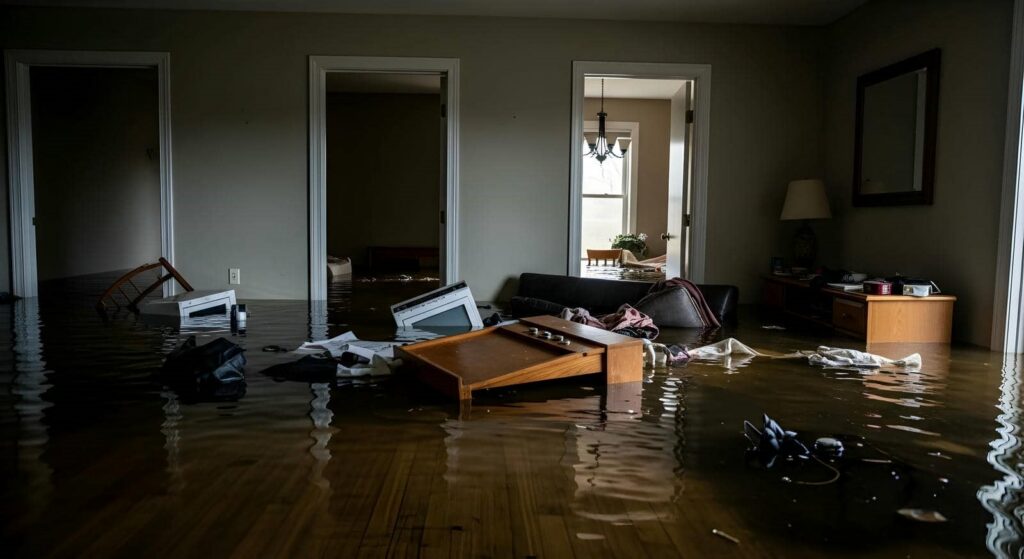
You may not realize that the first 24 hours after water intrusion often decide how much of your structure can be saved. You need to check for electrical and structural hazards, stop the source, and call a water damage cleanup pro fast. From there, the process moves through moisture mapping, targeted drying, sanitizing, material removal, and repairs, but the part that prevents hidden mold is what many people miss…
Key Takeaways
- Shut off water and electricity, secure the area, and document damage with photos for insurance.
- Assess safety for electrical, structural, and contamination hazards before entering affected spaces.
- Contact a water damage professional immediately for inspection, moisture mapping, and a cleanup plan.
- Start extraction and drying quickly using air movers, dehumidifiers, open circulation, and moisture meter checks.
- Clean, sanitize, remove unsalvageable materials, and complete repairs while monitoring for mold and humidity.
What to Do First After Water Damage?
First, shut off the water source if you can do so safely. Then turn off electricity to any affected areas to reduce shock risk.
Next, move yourself and your household into a dry, stable space and keep clear of standing water. Protect valuables, documents, and electronics by lifting them above the wet area or relocating them.
If the source is leaking, contain it with towels or buckets until help arrives. Take quick photos for your records, but don’t spend long in the area.
Then begin the professional water damage cleanup steps by removing excess water and ventilating the space. Acting fast helps your team protect shared spaces, limit spread, and restore your home with less disruption and greater confidence.
Check Safety and Call a Water Damage Pro
First, check the area for electrical hazards, structural instability, and contaminated water before you enter.
If you spot any immediate risk, stay out and keep others away.
Then call a water damage pro right away so they can assess the damage and start safe mitigation.
Assess Immediate Safety
Before you step into a water-damaged area, check for immediate hazards like electrical exposure, structural instability, gas leaks, and contaminated water. Shut off power only if the breaker is dry, reachable, and safe to use.
If floors sag, ceilings bow, or walls shift, keep out and mark the area. Wear boots, gloves, and eye protection before you move through standing water. Treat any floodwater from sewage, outdoors, or unknown sources as contaminated, and avoid skin contact.
Ventilate only if doing so won’t spread damage or fumes. Listen for crackling, hissing, or shifting sounds that signal hidden risk. You’re part of a smart, safety-first crew when you pause, evaluate, and protect everyone in the space.
Contact Water Damage Pros
Once the area is safe, call a water damage pro right away so they can assess the loss, stop further spread, and start mitigation.
You’ll get a fast inspection, moisture mapping, and a clear plan for extraction, drying, and cleanup. A trained crew knows where water travels behind walls, under flooring, and into cavities, so you don’t miss hidden damage.
They can also document conditions for your insurance claim and tell you what to move, isolate, or discard.
Stay close to the process, ask for a written scope, and confirm equipment setup times.
When you work with pros, you’re not handling it alone—you’re joining a team that restores your property with the right tools, standards, and urgency.
Stop the Water Source and Protect Your Home
Shut off the water source as quickly as you can to stop additional damage and make the area safe for cleanup.
If the leak comes from a supply line, valve, appliance, or fixture, close the nearest shutoff first, then use the main water shutoff if needed.
Turn off electricity to affected rooms only if you can do so safely, and keep everyone away from wet outlets, cords, and appliances.
Move belongings, rugs, and electronics to a dry zone, and place aluminum foil or wood blocks under furniture legs to limit staining.
If water entered from outside, block the entry point with sandbags or towels.
Take quick photos for your records, then call your restoration team so you stay coordinated and in control.
Dry Walls, Floors, and Hidden Moisture
Begin drying the affected areas right away to limit swelling, staining, and mold growth.
Position air movers to push air across wet walls and floors, and run a dehumidifier to pull moisture from the room.
Keep interior doors open so air can circulate, and lift rugs or furniture legs to expose damp surfaces.
Check baseboards, trim, and wall cavities with a moisture meter, because water often hides behind finishes and under flooring.
If you can, remove vent covers and inspect nearby insulation for trapped dampness.
Stay with the drying plan until readings return to normal and surfaces feel dry to the touch.
This step helps you protect your space and move forward with confidence as part of a coordinated cleanup team.
Clean, Sanitize, and Remove Damaged Materials
After drying is underway, clean all salvageable surfaces with an appropriate detergent, then sanitize areas exposed to contaminated water to reduce bacteria and odor. You’ll work systematically so your team stays organized and the space feels manageable again.
Wear gloves, eye protection, and a respirator when needed, and separate clean items from contaminated ones.
Wipe hard surfaces, then rinse and dry them.
Bag porous items that stayed soaked, warped, or stained.
Remove drywall, insulation, carpet pad, and other materials you can’t clean safely.
Move removed debris out of the work area quickly, and keep salvageable contents grouped and labeled.
Check nearby surfaces for residue, then repeat cleaning where needed. When you finish, the area should look cleaner, smell better, and be ready for the next restoration step.
Repair Damage and Prevent Mold
Once the damaged materials are out, repair the remaining structure promptly and seal any gaps that could trap moisture.
Replace rotted framing, warped drywall, and compromised insulation with dry, code-compliant materials.
Patch cracks around pipes, windows, vents, and baseboards so humid air can’t enter and feed growth.
Then run dehumidifiers and air movers until moisture readings meet target levels.
Inspect hidden spaces, including wall cavities, subfloors, and attic edges, because mold often starts where you can’t see it.
Apply antimicrobial treatment only where the surface needs it, and follow the label closely.
Keep indoor humidity below 60%, monitor for musty odors, and recheck affected areas over the next few days.
When you act fast and stay methodical, you protect your home and your crew.
Frequently Asked Questions
How Long Does Professional Water Damage Cleanup Usually Take?
Usually, you’ll need 3 to 7 days for cleanup and drying, but severe damage can take weeks. You’ll see faster results when you act quickly, remove water immediately, and monitor moisture levels closely.
Does Insurance Typically Cover Water Damage Restoration Services?
Usually, yes—many policies cover sudden water damage, and insurers often pay after covered losses. You should review your policy, document damage, and call your adjuster quickly to protect your claim.
Can I Stay in My Home During the Cleanup Process?
Yes, you can stay if the damage is limited and crews isolate work areas. But you shouldn’t if mold, sewage, electrical hazards, or heavy equipment exist. Follow the contractor’s guidance and local safety checks.
How Do Pros Detect Moisture Behind Walls and Under Floors?
You’ll spot hidden moisture with pin and pinless meters, infrared cameras, and thermal imaging, then confirm it with probes. Pros don’t leave things to chance—they check wall cavities and subfloors, so you’re in good hands.
What Certifications Should a Water Damage Company Have?
You should choose a company with IICRC certification, and ideally EPA lead-safe, OSHA safety training, and mold remediation credentials. You’ll feel more confident when they document moisture mapping, structural drying, and antimicrobial procedures.
Wrap-Up
From first alert to final fix, you keep your home safer by acting fast and following a clear cleanup plan. You check hazards, call a pro, stop the source, and start smart drying. Then you clean, sanitize, and remove ruined materials before repairs begin. With steady monitoring and mold-minded maintenance, you protect your property and peace of mind. Professional water damage cleanup helps you recover quickly, completely, and confidently.