

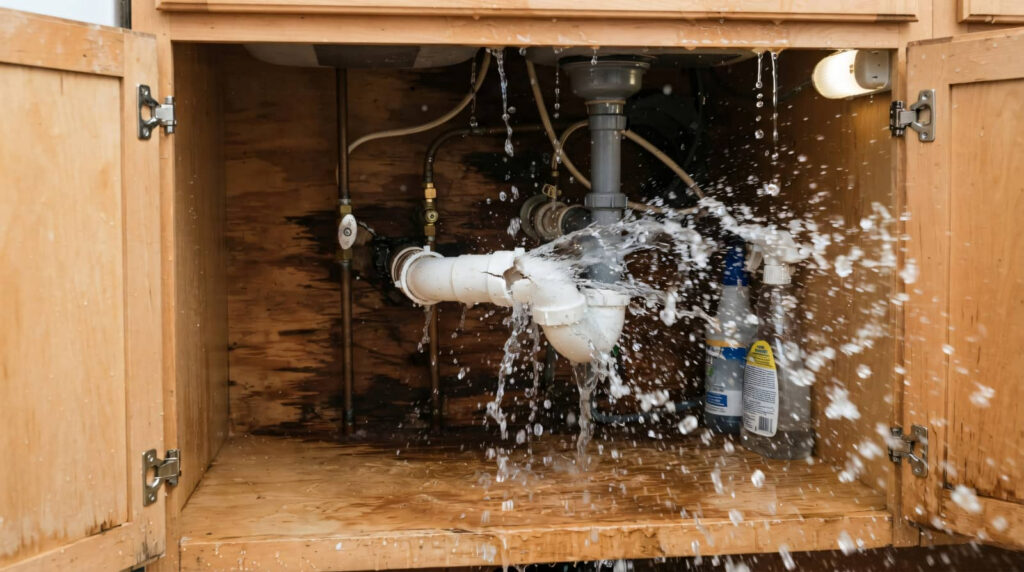
When you face a burst pipe, cleanup costs usually start around $1,000 and can climb past $5,000 depending on water spread, material damage, and mold risk. You’ll also pay more if the leak soaked drywall, flooring, or insulation, or if repairs require drying equipment and specialty labor. Insurance may help, but coverage isn’t automatic. The real cost often depends on how quickly you act, and what the hidden damage reveals next.
Key Takeaways
- Burst pipe cleanup typically costs $1,000–$5,000, with faster response often reducing overall damage and expense.
- Cleanup costs rise with the amount of water, number of rooms affected, and need for mold remediation.
- Damage class matters: Class 1 is minor, while Class 4 requires specialized, time-consuming restoration.
- Repair costs depend on leak severity, access difficulty, hidden damage, and whether code-compliant upgrades are needed.
- Insurance may cover sudden burst pipe damage, and immediate shutdown, documentation, and itemized estimates help reduce costs.
How Much Does Burst Pipe Cleanup Cost?
Burst pipe cleanup typically costs between $1,000 and $5,000, but the final price can rise sharply if the leak affects multiple rooms, damages flooring or drywall, or requires mold remediation.
You’ll usually see the cost of burst pipe cleanup services include water extraction, drying, sanitizing, and debris removal. If you act fast, you can often keep the job smaller and your repair path clearer.
A standard response may stay near the lower end when water stays on hard surfaces and crews reach the area quickly. When you need specialized equipment, you’ll pay more because the scope grows.
You’re not alone in facing this disruption; many homeowners rely on restoration teams to stabilize the space and help your home feel secure again.
What Affects Burst Pipe Cleanup Costs?
Your burst pipe cleanup costs depend largely on the extent of water damage, since more saturated materials and larger affected areas require more labor and equipment.
Access to the pipe also matters because hard-to-reach locations can increase labor time and repair complexity.
Drying, dehumidification, and any needed structural repairs further raise the total restoration cost.
Water Damage Extent
The extent of water damage is one of the biggest factors driving burst pipe cleanup costs, because restoration crews must address the visible flooding and moisture that has spread into walls, floors, insulation, and subflooring.
When you’re dealing with widespread saturation, technicians need more extraction, more drying equipment, and longer monitoring cycles to verify safe moisture levels.
If you catch the leak early, you’ll usually limit demolition and reduce labor, disposal, and material replacement costs.
But if water sits for hours, it can weaken drywall, warp wood, and raise the risk of microbial growth, which adds remediation steps.
For your home, a larger affected area almost always means a more complex, longer restoration and a higher total invoice.
Pipe Location Access
Access also affects burst pipe cleanup costs, because technicians have to reach the damaged line before they can stop the leak, extract water, and begin drying.
If the pipe sits behind finished walls, under slab concrete, in a crawlspace, or above a ceiling, your crew needs more time and access tools to work safely.
Tight utility chases, locked rooms, packed storage, and limited parking can slow response and raise labor charges.
Multi-story layouts often require ladders, protective coverings, and extra setup.
You may also see higher costs when crews must cut access openings or move obstacles just to inspect the failure.
Clear access helps your team work faster, limits disruption, and keeps the cleanup process more efficient for everyone involved.
Drying And Repairs
Drying and repair work often drive a large share of burst pipe cleanup costs because crews must remove hidden moisture, dry building materials, and restore damaged areas.
You’ll usually pay more when water soaks drywall, insulation, subflooring, or framing, since these materials need controlled drying or replacement. Technicians use air movers, dehumidifiers, and moisture meters to confirm that your structure is safe and stable.
If mold growth starts, costs rise fast because you may need containment, antimicrobial treatment, and extra labor.
Repairs also depend on finish quality: matching paint, tile, or flooring takes time and skill.
Faster response can reduce damage, but the longer water sits, the more you’ll likely spend.
Water Damage Classes and Cleanup Fees
When a burst pipe floods a property, cleanup fees depend heavily on the water damage class, which reflects how much water entered the space and how far it spread.
Class 1 usually covers limited absorption in a small area, so you’ll often see lower extraction and drying charges.
Class 2 involves more surface coverage and faster saturation, which raises labor and equipment costs.
Class 3 means water has soaked walls, ceilings, or insulation, so technicians need more intensive mitigation.
Class 4 includes deep-set damage in dense materials, and cleanup gets specialized and time-consuming.
You’re not alone in facing these tiers; you can expect fees to rise as containment, moisture mapping, and sanitation needs increase across each class.
Pipe Repair Costs by Damage Severity
Your pipe repair cost depends on damage severity, starting with minor leak repairs that usually involve localized sealing or small section replacement.
Moderate pipe damage often requires cutting out compromised runs, replacing fittings, and testing adjacent lines for pressure loss.
Major pipe failure can force full pipe replacement, which raises labor, material, and restoration costs considerably.
Minor Leak Repairs
Minor leak repairs usually stay on the low end of burst pipe cleanup costs because technicians can often isolate the damaged section, replace a fitting, or seal a small split without major demolition.
You’ll usually pay for labor, a modest amount of replacement pipe or soldering material, and a brief pressure test to confirm the line holds.
If the leak is accessible, your total stays lower because crews can work quickly and limit shutdown time. You also avoid extensive drying, wall removal, or fixture replacement, which keeps restoration simpler.
For homeowners and property teams, this is the kind of repair that helps you get back to normal fast.
When you’re comparing quotes, ask for itemized labor, parts, and inspection charges so you can evaluate the real cost.
Moderate Pipe Damage
Moderate pipe damage pushes cleanup costs higher because crews often need to replace a larger section of pipe, open more wall or ceiling material, and dry a broader area after the break.
You’ll usually see higher labor charges because technicians must isolate the line, remove wet finishes, and verify that hidden moisture hasn’t spread into framing or insulation.
If the damage affects multiple rooms, your restoration team may also need more drying equipment, containment, and antimicrobial treatment.
These added steps raise both repair and mitigation totals, but they also help you protect the structure and keep your home safe.
When you act quickly, you limit secondary damage, shorten the drying timeline, and stay in control of the overall restoration cost.
Major Pipe Replacement
Major pipe replacement drives burst pipe cleanup costs much higher because crews often need to cut out long runs of damaged pipe, open finished walls or ceilings, and rebuild sections that the leak has saturated.
You’re usually paying for emergency shutoff, demolition, pipe material, soldering or joint repair, pressure testing, drying, and finish restoration.
If the line sits behind tile, cabinetry, or structural framing, labor climbs fast, and you may also need plumbing permits or code upgrades.
In severe cases, expect coordinated work from plumbers, water mitigation techs, and drywall crews.
You can limit surprises by documenting the leak, getting a scoped estimate, and asking which repairs are structural versus cosmetic.
That way, your restoration team can keep your home safe, sound, and fully functional.
What Makes Pipe Repairs More Expensive?
Pipe repairs get more expensive when the damage extends beyond a simple leak, because hidden breaks, corrosion, and water intrusion can require more labor, materials, and drying time.
You’ll also pay more when access is tight, such as behind finished walls, under slab foundations, or inside crowded utility chases.
Older systems often need code-compliant upgrades, matching fittings, or full section replacement, which raises parts and labor costs.
If shutoff valves, joints, or adjacent piping have failed, your technician may need to rebuild more of the line to restore reliable service.
Emergency scheduling, after-hours work, and permit requirements can add further expense.
When you understand these factors, you can compare estimates confidently and choose the repair scope that keeps your home safe and your team aligned.
Drying, Dehumidifying, and Mold Removal Costs
Once the pipe is repaired, cleanup costs often shift to drying, dehumidifying, and mold prevention or removal. You’ll usually pay for air movers, commercial dehumidifiers, moisture monitoring, and labor until materials reach safe humidity levels.
The longer water sat, the more equipment and time you need, which raises the total. If drywall, insulation, or subflooring stayed wet, technicians may have to remove contaminated sections before drying can finish.
Mold treatment adds more cost when growth appears on framing, drywall, or contents, since crews must clean, HEPA-vacuum, and apply antimicrobial products.
You’re part of a group that benefits from fast action: quicker drying limits structural damage, reduces odor, and helps keep restoration work focused, efficient, and more affordable for your home.
Does Insurance Cover Burst Pipe Damage?
Insurance often covers burst pipe damage when the loss is sudden and accidental, but coverage usually depends on the policy language and the cause of the failure.
You’ll typically see payment for water intrusion, drywall removal, flooring repair, and related cleanup if the pipe failed without warning. Your insurer may deny a claim if the break resulted from long-term neglect, poor maintenance, freezing that wasn’t protected against, or a gradual leak.
You should document the loss immediately with photos, dates, and a plumber’s report. File the claim promptly and keep all receipts for emergency mitigation and repairs.
If your policy includes additional living expense coverage, you may also recover temporary housing costs while repairs are underway.
Review deductibles and exclusions carefully so you know where your coverage stands.
How to Lower Burst Pipe Restoration Costs
You can lower burst pipe restoration costs by acting fast and limiting secondary damage. Shut off the water main, cut power to wet areas, and document damage before cleanup starts.
Then call a licensed restoration team so they can measure moisture, map affected materials, and prioritize salvageable contents.
- Remove standing water immediately.
- Increase airflow with fans and dehumidifiers.
- Separate porous materials that can’t dry safely.
- Ask for itemized estimates before repairs begin.
You’ll usually save more when you coordinate with your insurer, choose repairs over full replacement when code allows, and stay involved during drying.
A responsive plan helps your household recover with less disruption, and it keeps you aligned with professionals who know how to protect your space and budget.
Frequently Asked Questions
How Long Does Burst Pipe Cleanup Usually Take?
You’ll usually finish burst pipe cleanup in 1 to 3 days, but severe flooding can take longer. You should expect extraction, drying, sanitizing, and repairs to extend the timeline.
Can Cleanup Costs Vary by Season or Weather?
Anachronistically, yes—your cleanup costs can rise in winter or after storms. You’ll pay more when freezing temperatures, limited access, or humidity slow drying, increase labor, and extend equipment rental for your property.
Do Plumbers Charge Extra for Emergency Weekend Calls?
Yes, you’ll usually pay extra for emergency weekend calls; you’re covering after-hours labor, dispatch, and urgency. Rates can rise 1.5x to 2x, so you should ask for the service fee upfront.
Is Temporary Relocation Covered During Restoration?
Sometimes, yes—you can get temporary relocation covered during restoration if your policy includes additional living expenses. You’ll need documented damage, proof your home’s uninhabitable, and prompt claims reporting to qualify for reimbursement.
Are Permits Needed for Major Pipe Replacement?
Yes, you’ll usually need permits for major pipe replacement; they’re the gatekeepers of compliant plumbing. You should check local codes, because scope, materials, and inspections vary, and your licensed contractor can usually handle filings efficiently.
Review
You can keep burst pipe cleanup costs closer to the lower end when you act fast, yet delays can quickly turn a manageable repair into a costly restoration. You may pay for water extraction, drying, and repairs, but hidden moisture, mold, and structural damage often drive bills higher. If you document the damage, shut off the water, and call a qualified pro early, you’ll reduce both expense and disruption.