

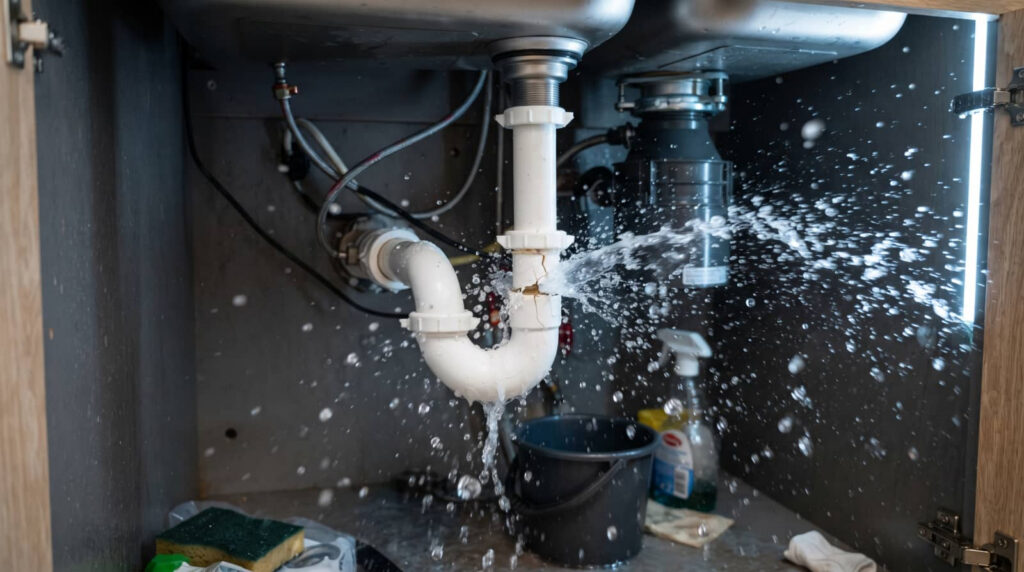
When a pipe bursts in your house, shut off the main water supply at once to stop the flow. Then contain the leak with towels, buckets, or a wet vacuum, and move valuables out of the affected area. Remove standing water quickly, start drying walls and floors with fans, and call a licensed plumber. You’ll also want to document the damage now, because the next steps can affect how much you recover.
Key Takeaways
- Shut off the main water supply immediately to stop flooding and limit further damage.
- Contain the leak with towels, buckets, and plastic to protect floors, furniture, and valuables.
- Remove standing water quickly using a wet/dry vacuum, mop, or pump.
- Dry affected areas with fans and dehumidifiers to prevent mold growth.
- Call a licensed plumber and document all damage with photos and notes for repairs and claims.
Shut Off Water After a Pipe Bursts
If a pipe bursts, shut off the main water supply right away to stop more water from entering the system.
Locate the main valve near your meter, basement, crawlspace, or where the line enters your home, then turn it clockwise until it stops. If you’ve got a family shutoff plan, follow it so everyone moves fast and stays aligned.
After the water stops, open the nearest cold taps to relieve pressure and drain remaining water from the lines. This is a core step in what to do after pipe bursts in house because it limits further loss and prepares you for the next repair steps.
If you can’t find or operate the valve, call your utility or a licensed plumber immediately.
Contain the Leak and Protect Valuables
Once the water is off, move quickly to contain the spread and protect anything that can be damaged. You’re not just reacting; you’re controlling the incident and keeping your home team steady.
Place towels, blankets, or absorbent pads around the leak to guide water away from walls, outlets, and furniture. Move portable electronics, documents, and small valuables to a dry room. If you can safely do it, elevate furniture legs on blocks or foil to limit contact with moisture.
- Use buckets under active drips
- Cover nearby furniture with plastic
- Remove rugs and floor runners
- Label soaked items for later sorting
Keep walkways clear so everyone can move safely. Work fast, stay organized, and protect the spaces that matter most to your household.
Remove Standing Water Quickly
Remove standing water as soon as it’s safe to do so, because every minute increases the risk of structural damage, mold growth, and electrical hazards.
Use a wet/dry vacuum, mop, bucket, or submersible pump to pull water out fast. Start at the lowest point and work toward the exit so you don’t spread it back across the room.
Empty containers often and keep the area clear for safe movement. If water is near outlets, call a pro before you continue.
You’re not alone in this cleanup; treat it like a team effort and keep communication tight.
Check hidden pockets under rugs, inside cabinets, and along baseboards, since trapped water can linger.
Remove salvageable items only after you’ve reduced the water level and have a safe path through the space.
Dry Walls, Floors, and Furniture
After the standing water is gone, dry walls, floors, and furniture as quickly as possible to limit swelling, staining, and mold growth. Use fans and dehumidifiers to move air and pull moisture from surfaces. Open interior doors and cabinet fronts so hidden areas can breathe.
Lift rugs, cushions, and bedding off wet floors so they can dry evenly. Wipe wood, metal, and drywall with clean towels, then replace damp towels often.
- Point fans across wet surfaces, not into one spot.
- Remove wet upholstery cushions and separate them.
- Check baseboards, corners, and under furniture.
- Keep drying until everything feels cool, not damp.
Act fast and work together so your space dries safely and stays comfortable for everyone.
Call a Plumber and Photograph Damage
Call a licensed plumber right away to stop the source of the burst and check for hidden leaks, broken pipes, or pressure issues before you restore water service.
You’ll protect your home faster when a pro confirms the repair and tests the line.
While you wait, photograph every affected area: walls, baseboards, flooring, ceilings, furniture, appliances, and standing water.
Capture wide shots, close-ups, and any visible pipe damage, stains, or mold. Include timestamps if your phone adds them.
Keep notes on what happened, when you noticed it, and which rooms were hit.
Save receipts for towels, fans, or emergency services.
These records help you work with your insurer, your plumber, and your household team, so everyone can coordinate cleanup and recovery with confidence.
Frequently Asked Questions
How Do I Tell if Pipes Are Still Leaking Inside Walls?
Check for damp drywall, staining, musty odors, and warm spots, then listen for running water when fixtures are off. Use a moisture meter, inspect meter movement, and call a plumber if readings stay high.
When Should I Shut off Electricity After a Pipe Bursts?
Shut off electricity immediately if water reaches outlets, appliances, the panel, or wet floors near wiring. If you’re unsure, turn it off at the breaker first, then call an electrician before you reenter affected areas.
Can I Use a Wet Vacuum for Floodwater Cleanup?
Yes—you can use a wet vacuum for shallow floodwater, but only after you’ve killed power and confirmed the area’s safe. First, remove standing water, then dry carpets fast; otherwise, hidden moisture spreads damage.
What Signs Show Hidden Mold After Water Damage?
You’ll notice hidden mold by musty odors, worsening allergies, stains, peeling paint, warped drywall, and damp spots. Check behind walls, under floors, and near HVAC vents; if you suspect it, act fast and document everything.
Should I Contact My Insurance Company Right Away?
Yes—call your insurance company right away. Like a lighthouse in a storm, your claim can guide recovery. You’ll document damage, protect coverage, and connect with support fast, so you don’t face this alone.
Conclusion
When a pipe bursts, you need to act fast to limit damage. Shut off the main water valve, then use towels, buckets, and plastic sheeting to contain the leak. For example, if water reaches a living room rug, you should lift the rug and run fans immediately. Remove standing water, dry every surface, and call a licensed plumber. Finally, photograph the damage so you’ve got clear records for insurance.