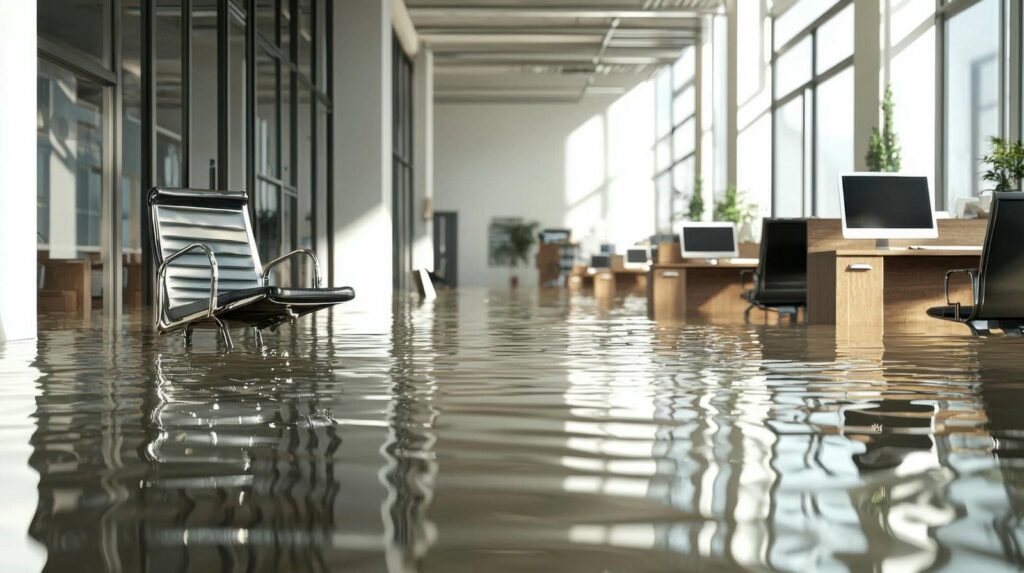
You might think commercial water damage cleanup can wait, but every hour increases structural risk, mold potential, and business interruption. You need to assess affected areas, stop the source, document losses, and remove standing water fast. Then sanitation, inventory recovery, and equipment restoration become critical. The real challenge is choosing the right response sequence, because one missed step can extend downtime far longer than expected.
Key Takeaways
- Fast response limits spread, reduces repair costs, and helps keep commercial operations running safely.
- Assess and document all damage with photos, moisture readings, and inventory records before cleanup begins.
- Stop the water source, shut down affected systems, and remove standing water as quickly as possible.
- Dry and sanitize impacted areas using dehumidifiers, air movers, and antimicrobial treatments to prevent mold growth.
- Choose an experienced commercial cleanup team that can coordinate repairs, protect inventory, and minimize downtime.
Why Fast Commercial Water Damage Cleanup Matters
When water hits a commercial property, every minute counts because moisture can spread quickly into flooring, drywall, inventory, and electrical systems, increasing the scope of damage and the cost of restoration.
You need fast water damage cleanup for commercial properties to limit business interruption and protect your team’s workspace. Prompt extraction, controlled drying, and antimicrobial treatment help stabilize materials before secondary damage starts.
The quicker you act, the less likely you’ll face warped finishes, corrosion, microbial growth, or unsafe conditions that can slow operations. A rapid response also supports continuity, so your staff, tenants, and customers can return to a cleaner, safer environment sooner.
Act quickly to reduce damage, prevent microbial growth, and help your team return to a safer, cleaner space sooner.
When you move quickly, you’re not just reducing losses—you’re protecting your business community and restoring confidence in your facility.
Assess Water Damage in Key Building Areas
Start by evaluating the most vulnerable building areas, including flooring, baseboards, drywall, ceilings, insulation, electrical rooms, storage areas, and HVAC zones, because water rarely stays contained to one surface.
You’ll map visible staining, warping, bubbling, and discoloration, then confirm hidden moisture with meters and thermal imaging. Your team should check adjacent rooms, shared walls, and ceiling cavities, since migration often follows seams and penetrations.
Document conditions before moving equipment so your reports stay accurate and your crew stays aligned.
Inspect subfloors for soft spots.
Check baseboards for swelling.
Test drywall at the lower edge.
Review electrical spaces for moisture exposure.
Examine HVAC returns and plenums.
Stop the Water Source First
Before you dry, extract, or tear out materials, you’ve got to isolate and shut off the water source so the damage doesn’t keep spreading. You should locate the supply valve, break point, or failed fixture fast, then close the correct shutoff and verify that flow has stopped.
In a commercial building, that may mean coordinating with facilities staff, maintenance, or a utility contact so you don’t interrupt unrelated operations. If the leak comes from HVAC, plumbing, or a roof penetration, you’ll need to stop the system safely before restarting anything.
Once the source is controlled, you protect adjacent suites, reduce saturation in structural materials, and keep cleanup crews working in a stable environment. That first move helps your team stay efficient, organized, and aligned.
Document Damage for Insurance Claims
You should photograph every affected area before cleanup begins, capturing wide shots, close-ups, and any visible structural or contents damage.
Record each damaged item in a detailed inventory with quantities, model numbers, estimated loss, and condition notes.
Then save all repair estimates, invoices, and contractor reports for your claim file.
This documentation strengthens your insurance submission and helps support faster claim review and reimbursement.
Photograph All Affected Areas
Capture every affected area with clear, time-stamped photos to create a reliable record for insurance claims and restoration planning. You should photograph each room from multiple angles, then move in for close-ups of warped baseboards, stained ceilings, saturated drywall, and standing water.
Include wide shots that show the full context and detail shots that verify severity. Use consistent lighting, avoid flash glare on glossy surfaces, and keep your camera steady. As a team, you’ll build credibility when your images are organized and easy to review.
Photograph entry points and spread patterns
Capture visible mold, debris, and discoloration
Document wall, floor, and ceiling damage
Note damaged fixtures and electrical hazards
Save images in date-ordered folders
Record Damaged Inventory
Next, record a detailed inventory of every item the water affected so you can support insurance claims and restoration decisions.
List each asset by room, SKU, serial number, quantity, and condition, and note whether you can clean, salvage, or replace it. Include furniture, electronics, stock, documents, fixtures, and specialty equipment, since missing line items can delay coverage reviews.
You should tag each item with the estimated loss category and the moisture exposure time, then store the list in a shared log your team can access.
Keep entries factual and consistent, using the same naming conventions across departments.
When you document damage this way, you strengthen your claim file, improve communication with adjusters, and help your restoration partners work from the same trusted record.
Save Repair Estimates
Save every repair estimate, invoice, and contractor proposal in one organized file so you can document losses for insurance and track restoration costs accurately.
You should keep each document dated, labeled by system or room, and matched to photos and moisture readings. That way, your insurer can verify scope, compare bids, and confirm that you acted quickly to limit secondary damage.
When you work with a trusted restoration team, you’ll build a clear claim package that supports your recovery and helps your business stay connected to its support network.
Store PDFs and originals together.
Note emergency vs. permanent repairs.
Record labor, materials, and equipment separately.
Keep change orders and approvals.
Back up files in the cloud.
Remove Standing Water From Commercial Spaces
Start by removing standing water as quickly as possible to limit structural damage, slip hazards, and bacterial growth in the commercial space.
Remove standing water quickly to reduce damage, slip hazards, and bacterial growth in your commercial space.
You should deploy submersible pumps, wet vacuums, and extraction tools matched to the water volume and floor type. Isolate affected zones, post clear access restrictions, and verify electrical safety before you begin.
If you manage a shared facility, coordinate with your team so everyone follows the same extraction plan and communicates changes fast.
Work from low points toward drains or exits, and monitor hidden pooling under furniture, pallets, and equipment bases.
Document water depth, source, and removed materials for your records. Swift extraction helps you protect assets, reduce downtime, and keep your workplace steady, organized, and ready for the next recovery step.
Dry Walls, Floors, and Equipment Fast
Once standing water is removed, you need to dry walls, floors, and equipment immediately to prevent swelling, warping, corrosion, and mold growth.
Position commercial dehumidifiers and high-velocity air movers to create continuous airflow across wet surfaces. You should lift rugs, open access panels, and separate equipment so trapped moisture can escape.
Check insulation, baseboards, and wall cavities for hidden dampness with meters, then adjust drying zones as needed. Keep electrical assets powered off until they’re fully dry and inspected.
Your team stays efficient when you document readings and track progress every few hours.
Direct air across saturated areas
Control humidity with dehumidifiers
Measure moisture in materials
Protect sensitive equipment
Maintain a drying log
Sanitize the Area to Prevent Mold
You should sanitize all affected surfaces with an antimicrobial treatment to suppress bacterial growth and reduce the risk of mold colonization.
After cleaning, you’ll need to use mold-resistant drying methods that maintain controlled airflow and humidity, so moisture doesn’t remain in porous materials.
This approach helps you stabilize the site quickly and limits secondary damage during commercial water remediation.
Antimicrobial Surface Treatment
Applying antimicrobial surface treatment helps stop residual moisture and organic matter from turning into mold after water intrusion in a commercial property.
You apply an EPA-registered product to cleaned, nonporous and lightly porous surfaces, targeting seams, corners, and high-touch zones where contamination lingers. This step supports your crew’s cleanup standard and protects everyone who works there.
Follow the manufacturer’s dwell time exactly.
Use PPE and limit access during application.
Treat walls, floors, trim, and fixtures.
Focus on surfaces that contacted floodwater or sewage.
Document the product name, lot number, and coverage areas.
You’ll reduce microbial growth risk, reinforce a safe reopening plan, and help your team feel confident returning to a space that’s been properly sanitized and managed.
Mold-Resistant Drying Methods
Mold-resistant drying methods help stop lingering moisture from turning into a larger contamination problem after water damage in a commercial property.
You should deploy commercial dehumidifiers, air movers, and controlled ventilation to pull humidity down fast and keep surfaces from staying damp.
You’ll improve results by isolating affected zones, removing porous materials that can’t dry safely, and sanitizing hard surfaces with approved antimicrobial agents.
Monitor moisture with meters, not guesswork, so you can verify structural materials, subfloors, and wall cavities are dry before reopening.
You’ll reduce mold risk and protect indoor air quality when you maintain negative pressure and filter airborne spores.
This approach helps your team stay aligned, limit downtime, and restore a clean, professional environment that supports everyone inside.
Restore Damaged Inventory and Equipment
Once the standing water is removed and the affected area is stabilized, restoration teams can begin evaluating inventory and equipment to determine what can be salvaged, cleaned, repaired, or replaced.
You’ll want to document each item’s condition with photos, serial numbers, and moisture readings so your team can track handling and recovery accurately.
Use controlled cleaning methods for nonporous surfaces, corrosion checks for electronics, and approved decontamination for stored goods.
Segregate affected assets quickly to prevent cross-contamination and inventory errors.
Sort by damage level
Label salvageable items
Remove residual moisture
Clean with compatible agents
Verify function before reuse
When you work with trained specialists, you protect asset value and keep your operation’s standards consistent.
Reduce Downtime During Cleanup
To reduce downtime during commercial water damage cleanup, you need a coordinated response that isolates the affected area, prioritizes critical operations, and keeps work moving in phases.
You should reroute foot traffic, protect unaffected zones, and keep essential systems online whenever possible. Use moisture mapping, air movers, and dehumidifiers to speed structural drying without disrupting adjacent departments.
Sequence demolition, sanitation, and repairs so crews can work around your operating schedule. You’ll cut delays by documenting conditions, communicating daily updates, and assigning clear access paths for staff and vendors.
When you keep everyone informed, your team stays aligned and productive. This approach helps your facility recover faster, limits revenue loss, and supports the confident, unified workspace your people rely on.
How to Choose the Right Cleanup Team
When you choose a cleanup team, verify that they’ve handled commercial water damage in facilities like yours, since business properties often require specialized moisture mapping, containment, and restoration protocols.
You should also check their response availability and confirm they can mobilize 24/7, because rapid deployment helps limit structural loss and operational downtime.
A qualified team will document its process, communicate clearly, and begin mitigation immediately to keep your recovery on track.
Verify Commercial Experience
Commercial water damage demands a cleanup team that understands the demands of large, occupied, and mission-critical spaces. You should verify that the company has documented commercial project experience, not just residential jobs.
Look for crews who’ve handled offices, warehouses, retail floors, healthcare suites, and industrial sites with varied substrates and compliance requirements. Ask how they assess moisture migration, isolate affected zones, and protect business assets while minimizing disruption.
Review commercial case studies and references.
Confirm familiarity with structural drying equipment.
Check knowledge of HVAC and contents protection.
Ask about coordination with building management.
Verify insurance and safety protocols.
When you choose specialists who speak your facility’s language, you join a team that respects uptime, safety, and operational continuity.
Check Response Availability
After you’ve confirmed the team has real commercial experience, make sure they can actually respond fast enough to protect your operation.
Ask for 24/7 availability, ensured arrival windows, and dispatch coverage for your area. You need a crew that can mobilize extraction, drying, and containment equipment within hours, not days.
Verify they maintain enough technicians, vehicles, and inventory to handle large losses without delay. Confirm they’ll coordinate with your facility manager, security team, and insurer immediately after the call.
Fast response limits microbial growth, structural saturation, and business interruption. You’re not just hiring a vendor; you’re choosing a recovery partner your team can trust under pressure.
Reliable availability helps everyone stay aligned, protected, and ready to reopen with confidence.
Frequently Asked Questions
How Do I Know if My Building Needs Professional Water Extraction?
You need professional water extraction if standing water remains, materials feel saturated, odors persist, or moisture readings stay elevated. You’ll protect structural integrity, reduce mold risk, and speed reopening with expert drying and containment.
Can Employees Stay Onsite During Commercial Water Damage Cleanup?
Yes, you can stay onsite if you isolate affected zones and maintain safe air quality, but you shouldn’t enter wet areas. You’ll need barriers, dehumidifiers, and monitoring so your team remains productive, protected, and included.
What Kinds of Water Damage Are Considered Emergency Situations?
You’ll treat burst pipes, sewer backups, flooding, roof leaks, and sprinkler failures as emergencies when water threatens electrical systems, structural materials, inventory, or operations, because you need immediate containment, extraction, and drying to prevent escalating losses.
How Long Does Insurance Approval Usually Take After Water Damage?
Usually, you’ll get insurance approval in 24–72 hours, though complex claims can take longer. You should document damage, contact your adjuster fast, and push for prompt processing to reduce costly downtime.
What Documents Should I Keep for the Cleanup and Repair Process?
Keep damage photos, cleanup invoices, mitigation logs, moisture readings, repair estimates, permits, vendor contracts, and insurance correspondence. You’ll support claims, track scope, and prove compliance, while your team stays aligned and confident throughout restoration.
Review
When water hits your commercial property, you can’t afford to wait. Move fast, document everything, and bring in a qualified cleanup team to stop the damage from spreading. Like a well-run ship in rough seas, your response should be steady, coordinated, and precise. By extracting water, sanitizing surfaces, and protecting inventory early, you’ll reduce downtime, limit losses, and restore operations with confidence. Quick action today can keep your business on course tomorrow.