

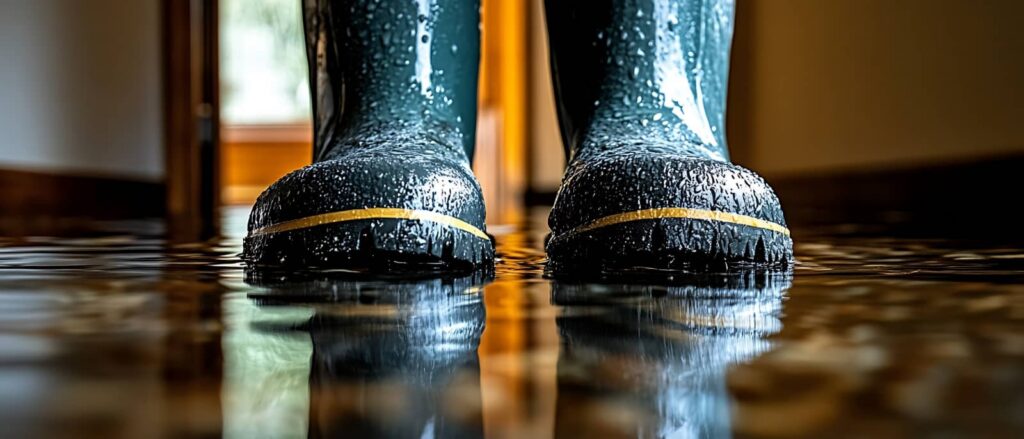
After storm flooding damages your property, you need to act quickly and safely. First, make sure the area is secure before you enter, then document every affected room, item, and structural issue for insurance records. Next, remove standing water and debris, dry out surfaces to slow mold growth, and arrange urgent repairs with licensed contractors. The steps you take now can affect both recovery time and claim results, and a few details matter more than you might expect.
Key Takeaways
- Ensure the area is safe, wear protective gear, and avoid floodwater, gas leaks, and unstable structures.
- Photograph all damage, note dates, and list damaged items with brands and model numbers for insurance.
- Remove standing water and debris quickly using pumps, wet vacs, buckets, and sturdy bags.
- Dry the home thoroughly with fans, dehumidifiers, and open windows to prevent mold growth.
- Prioritize urgent repairs, hire licensed contractors for major work, and keep all receipts and estimates.
Check Flood Damage Safely
Before you inspect flood damage, make sure the area is safe to enter. Turn off electricity at the main breaker only if you can reach it without standing water. Wear boots, gloves, and a mask, and keep children and pets away.
Watch for sagging ceilings, loose floors, sharp debris, and contaminated water. Use a flashlight instead of candles. If you smell gas, hear hissing, or see structural shifts, leave immediately and call emergency services.
Check walls, baseboards, appliances, and outlets for visible damage, but don’t move unstable items. If you’re asking what to do after storm flooding damage, start by evaluating hazards first so you and your household stay protected.
Stay calm, move slowly, and treat every wet surface as unsafe until proven otherwise.
Document the Damage for Insurance
Once you’ve confirmed the area is safe, document every sign of storm flooding damage as soon as possible so you can support an insurance claim.
Take wide shots of each room, then close-up photos of walls, floors, furniture, appliances, and any visible stains, warping, or mud lines. Record the date and time on every image if your device allows it.
Make a written inventory of damaged items, including brand names, model numbers, approximate age, and where each item was located. Save receipts, warranties, and prior photos that show the property’s condition before the storm.
Back up files in the cloud and on a separate device so you can share them with your insurer and stay organized with neighbors or family helping you through the process.
Remove Standing Water and Debris
Start removing standing water as soon as it’s safe, because the longer it sits, the more damage it can cause to floors, walls, and belongings.
Use a pump, wet vac, buckets, or towels to clear water from each room, starting with the deepest areas. Wear boots, gloves, and protective clothing, and turn off electricity before entering flooded spaces.
Move wet furniture, rugs, boxes, and loose items out of the way so you can reach hidden water and debris. Gather mud, branches, insulation, broken glass, and other storm debris into sturdy bags or containers.
Check drains, vents, and low corners for trapped water. Work methodically so you don’t miss affected areas.
If you’re restoring your home with others, assign each person a zone to keep cleanup organized and efficient.
Dry Out Your Home to Prevent Mold
After you’ve cleared standing water and debris, focus on drying every affected surface as quickly as possible to reduce the risk of mold growth. Open windows when weather allows, and run fans and dehumidifiers to keep air moving through the space.
Lift damp rugs, cushions, and fabrics so moisture can escape from both sides. Check hidden areas, including closets, baseboards, and under sinks, because trapped water can linger there and spread odor or mildew.
- Remove wet materials that can’t dry fast enough.
- Wipe hard surfaces with clean, dry cloths.
- Keep indoor humidity as low as possible.
Stay consistent with your drying routine, and monitor surfaces daily for dampness. Acting quickly helps you protect your home and stay on track with others facing storm recovery.
Start Flood Repairs
Before you rebuild, inspect the damage and document what needs repair so you can prioritize safely and accurately.
Start with the most urgent structural issues: roof leaks, weakened flooring, damaged walls, and compromised electrical or plumbing systems.
Use licensed contractors for major repairs, especially if water reached outlets, panels, or load-bearing materials.
Replace soaked insulation, drywall, and carpet that can’t fully dry.
Clean and disinfect salvageable surfaces to limit contamination.
Keep receipts, photos, and contractor estimates for insurance claims and future reference.
If you live in a flood-prone area, consider flood-resistant materials for your next repairs.
You’re not alone in this process; many property owners face the same steps after storm damage, and a careful repair plan helps you restore safety, function, and confidence.
Frequently Asked Questions
Should I Contact My Insurance Company Before Cleaning Up?
Yes, you should contact your insurance company before cleaning up. You’ll want to document damage first, then follow their guidance, since some policies require photos, receipts, and approval before you remove or discard items.
Can I Stay in My Home After Flooding Damage?
Only if you’re certain it’s safe—you might find the same signs officials warn about: structural damage, contaminated water, gas leaks, or mold. You should leave if utilities’re compromised, then return only after inspection.
What Items Should I Save Versus Discard After Flooding?
You should save hard, nonporous items you can clean and disinfect, like metal, glass, and some plastics; discard soaked drywall, insulation, upholstered furniture, mattresses, food, medicines, and anything moldy, damaged, or contaminated beyond safe restoration.
How Do I Find a Qualified Flood Restoration Contractor?
Check credentials first: you’ll want a licensed, insured contractor with flood restoration certification, references, and 24/7 emergency service. Like a compass in fog, verify experience, written estimates, and mold remediation training before you hire.
Are There Government Aid Programs for Storm Flood Recovery?
Yes—you can often get FEMA, SBA, and state disaster aid after storm flooding. You’ll need to apply quickly, document losses, and meet eligibility rules. Check local emergency offices and nonprofits for extra support.
Review
After storm flooding, you should move quickly but carefully, because water leaves damage like a silent thief in the night. Check the area for hazards before entering, document every affected item for insurance, and remove standing water and debris as soon as possible. Then dry out your home thoroughly to stop mold before it starts. Finally, make urgent repairs with licensed contractors and keep every receipt, so you’ve got a solid claim record.