

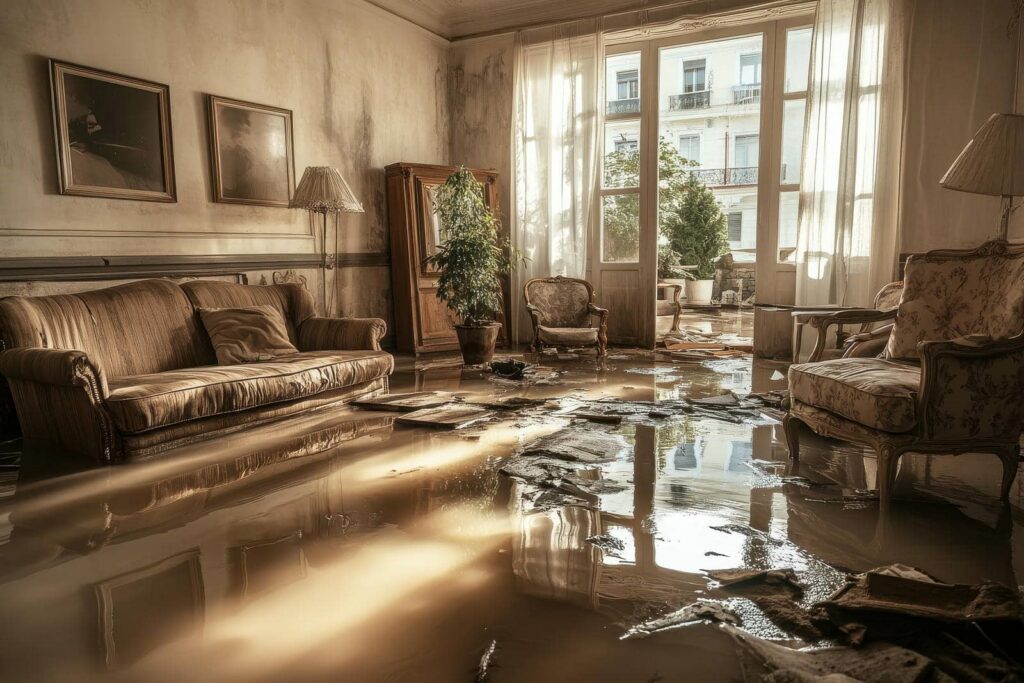
You want fast cleanup, you want accurate pricing, and you want to avoid surprise repairs when budgeting the cost of water damage cleanup services. Water damage cleanup usually costs $500 to $1,500 for small jobs, but it can climb to $3,000 to $7,000 when the affected area is larger or the damage is severe. Categories of water, hidden moisture, mold risk, and emergency response all change the bill, and one of them can shift the total more than you’d expect.
Key Takeaways
- Water damage cleanup typically costs $500 to $1,500 for small incidents and $3,000 to $7,000 for extensive damage.
- Pricing depends on affected area size, water category, drying time, material removal, and emergency response needs.
- Clean water is cheapest to restore, while gray water and black water require more labor, protection, and contamination control.
- Hidden moisture, mold risk, standing water, and deeper saturation increase extraction, demolition, and drying costs.
- After-hours service, difficult access, containment, and disposal fees can raise the final cleanup bill significantly.
What Water Damage Cleanup Includes
Water damage cleanup includes more than just removing visible water; it typically starts with inspection, moisture mapping, and identifying the source of the intrusion so technicians can stop further damage.
You’ll then see extraction, controlled demolition of unsalvageable materials, and targeted drying with air movers, dehumidifiers, and heat.
Technicians monitor moisture levels in framing, drywall, and subfloors, so you know hidden pockets won’t linger. They also sanitize affected surfaces, address odors, and document conditions for your records.
Technicians monitor moisture in framing, drywall, and subfloors, then sanitize surfaces, address odors, and document every step.
When contamination is present, they’ll use protective procedures and isolated work zones.
The cost of water damage cleanup services often reflects these tasks, but the work’s real value is protecting your home’s structure, air quality, and your place in a safe, healthy space.
How Much Water Damage Cleanup Costs
Your water damage cleanup cost usually depends on the affected area size, water category, drying time, and whether materials like drywall, flooring, or insulation need removal.
Typical pricing can range from a few hundred dollars for minor cleanup to several thousand dollars for structural drying and full restoration.
You’ll see total expenses rise when mold risk, sewage contamination, emergency response, and specialized equipment add labor and disposal costs.
Cleanup Cost Factors
Cleanup costs can range from a few hundred dollars for a small, contained spill to several thousand dollars when damage affects multiple rooms, structural materials, or electrical systems.
You’ll usually pay more when water sits longer, because moisture spreads and crews need extra drying, removal, and sanitation. Scope drives labor, equipment, and disposal time, so a larger loss naturally costs more.
Source and category of water
Material absorption and hidden damage
Drying, dehumidification, and cleanup access
If you’re comparing bids, ask how technicians inspect walls, flooring, and insulation, because unseen moisture can raise the final bill.
You’re not just paying for water removal; you’re paying for the skill, gear, and verification that help your space feel safe again.
Typical Price Ranges
Typical water damage cleanup costs often start around $500 to $1,500 for a small, localized incident, but they can climb to $3,000 to $7,000 or more when the loss involves multiple rooms, saturated drywall, flooring removal, or equipment-intensive drying.
You’ll usually see the lower end when you catch the problem early and the affected area stays limited.
In practice, crews document the loss, extract water, dry structural materials, and verify moisture levels before they close out the job.
If you’re comparing quotes, ask what’s included so you can spot gaps in scope. You deserve clear numbers, not surprises, and a good provider will explain the estimate in plain language.
Expect higher totals when the cleanup needs longer drying cycles or more labor.
Restoration Expense Drivers
Water damage cleanup costs rise or fall based on what the crew has to remove, dry, repair, and replace, along with how quickly they can access the loss.
You’ll usually pay more when water sits longer, materials absorb deeper, or hidden cavities need demolition. Fast entry and good documentation help your team keep labor and equipment time down.
Source category: clean water costs less than gray or sewage-contaminated water.
Scope: drywall, insulation, flooring, and cabinetry replacements drive larger invoices.
Drying complexity: saturated framing, mold risk, and moisture monitoring add days.
You can lower surprises by calling immediately, moving belongings safely, and asking for a written scope before work starts.
That helps you stay informed and supported.
How Water Damage Categories Affect Price
Your cleanup price changes with the water category because each level requires different containment, removal, and sanitation steps.
Category 1 clean water usually costs less since it poses minimal contamination risk, while Category 2 grey water needs more protective handling and disinfection.
Category 3 black water drives the highest cost because you’re dealing with sewage, severe contamination, and more extensive demolition and antimicrobial treatment.
Category 1 Clean Water
Category 1 clean water usually creates the lowest restoration cost because it starts from a non-contaminated source, such as a broken supply line, sink overflow, or appliance leak.
You’ll usually pay less because technicians can dry materials faster and reduce demolition. The main price drivers are:
Affected area size — larger rooms need more extraction and drying equipment.
Material saturation — carpet, drywall, and subflooring absorb water differently, changing labor needs.
Response time — the sooner you act, the fewer repairs you’ll need.
If you catch the loss early, you’re in a better position to keep your costs controlled and stay part of a community of homeowners who handle damage proactively.
Fast mitigation also helps protect finishes, limit mold risk, and shorten the overall restoration timeline.
Category 2 Grey Water
When the water isn’t clean, cleanup costs usually rise because crews need more protection, more labor, and stricter disposal procedures.
With Category 2 grey water, you’re dealing with runoff from appliances, sinks, or overflow that may carry bacteria and contaminants. That means technicians often remove affected materials faster, use antimicrobial cleaning, and monitor moisture more closely.
You can expect pricing to reflect extra PPE, disposal fees, and longer drying time if drywall, carpet, or insulation soaks up moisture. If you act quickly, you may save nearby finishes and reduce demolition.
Your estimate also depends on room size, source type, and how long the water sat. In our community, fast response keeps damage manageable and helps you get back to normal sooner.
Category 3 Black Water
If sewage, floodwater, or other heavily contaminated water enters the structure, cleanup costs rise sharply because crews must treat the area as a biohazard. You’ll pay more for Category 3 black water because technicians need full PPE, containment, antimicrobial cleaning, and controlled demolition of porous materials.
This isn’t just wet carpet; it’s a health-risk event that can spread bacteria, viruses, and mold fast.
Source control: stopping the intrusion lowers labor and emergency-response charges.
Material loss: drywall, insulation, and flooring often need disposal, not drying.
Decontamination scope: larger affected areas require more testing, disinfectant, and disposal.
If you’re dealing with this, you’re not alone—your restoration team should explain each line item clearly and help you regain a safe, livable space.
How Room Size and Water Depth Affect Costs
Room size and water depth directly affect cleanup cost because they determine how much labor, equipment, and drying time the job requires.
If you’re dealing with a small bathroom, crews can extract water faster, set fewer air movers, and finish sooner.
A larger living area needs more extraction passes, more dehumidifiers, and longer monitoring, so your price rises with square footage.
Depth matters too: a thin film usually means surface drying, while standing water several inches deep requires pumping, heavy extraction, and more saturated materials to dry.
You’ll often pay more when water covers multiple rooms because technicians must stage equipment, move it strategically, and verify moisture levels across each zone.
The bigger and deeper the loss, the more your restoration team has to work as one.
Hidden Water Damage Cleanup Costs
What seems like a straightforward cleanup can hide several extra charges that show up after the initial estimate. You may feel prepared, but your quote often excludes containment setup, antimicrobial treatment, disposal fees, and after-hours labor.
Moisture readings, access challenges, and content handling can also add cost because technicians must move carefully to protect your space and your team’s workflow.
Inspection extras: diagnostic scans and repeated readings verify hidden saturation.
Logistics fees: stairs, tight entries, or long hose runs slow work.
Documentation costs: detailed photos, reports, and insurer coordination take time.
When you understand these line items, you can compare bids more confidently and keep your project aligned with your budget and your crew’s needs.
Repair or Replace After Water Damage
Once cleanup reveals the full extent of the damage, you’ll need to decide whether to repair materials or replace them outright, and that choice can have a major effect on total restoration cost.
You should inspect drywall, flooring, insulation, cabinets, and trim for swelling, delamination, warping, or structural loss. If the material still has strength and dries within spec, repair may save money and keep the room’s original finish.
If it’s saturated, buckled, or contaminated by prolonged exposure, replacement usually costs more upfront but prevents recurring failures and delays.
You can lower expenses by matching finishes, salvaging reusable framing, and approving only needed demolition.
Ask your restoration pro for itemized estimates so you and your crew stay aligned on scope, timeline, and budget.
Why Mold Raises Costs
Mold can push water damage cleanup costs up quickly because it usually turns a standard dry-out into a larger containment and remediation job. You’ll pay more because technicians must isolate affected areas, remove porous materials, and verify that spores aren’t spreading into clean rooms.
That extra labor and testing adds real cost, but it also protects your home and everyone in it.
Containment: plastic barriers, negative air, and HEPA filtration.
Removal: drywall, insulation, carpet, and other materials that can’t be salvaged.
Verification: moisture checks and air or surface testing to confirm cleanup worked.
When you understand these steps, you’re better prepared to compare bids and choose a crew that treats your space like part of the same community.
How Emergency Response Affects Pricing
When water damage hits, the speed of the response can change the price as much as the damage itself.
If you call for emergency service after hours, on weekends, or during holidays, you’ll often pay higher labor rates because crews, trucks, and drying equipment must mobilize immediately.
Rapid response also limits how long water sits in flooring, drywall, and insulation, which can reduce demolition, antimicrobial treatment, and structural drying time.
If you wait, water spreads through cavities and subfloors, and technicians need more time on site, more monitoring, and more specialized extraction methods.
You’re paying for availability, travel, and the ability to start work now, not later.
In a strong restoration plan, that urgency is what keeps damage from becoming a larger, more expensive project for your home and your neighbors.
How to Lower Cleanup Costs
You can lower water damage cleanup costs by acting fast, limiting the affected area, and documenting the loss before demolition starts. When you shut off the source, remove standing water, and increase airflow, you reduce drying time and prevent secondary damage that drives up labor and material charges.
Work with your restoration crew to prioritize salvageable materials so they can target extraction, antimicrobial treatment, and moisture mapping efficiently.
Protect unaffected rooms with plastic barriers and controlled access.
Provide complete photos and moisture readings for insurance and scope accuracy.
Approve drying equipment quickly so rentals don’t extend longer than needed.
You’ll feel more in control when you track the scope closely and ask for itemized estimates, because transparency helps your team stay aligned and avoid surprise costs.
Frequently Asked Questions
How Long Does Water Damage Cleanup Usually Take?
You’ll usually finish cleanup in 1 to 5 days, but drying, sanitizing, and repairs can extend it to 1 to 3 weeks, depending on water volume, materials affected, and mold risk.
Will My Homeowners Insurance Cover Water Damage Cleanup?
Usually, yes, if you’ve got sudden, accidental damage; ironically, you’ll need your policy’s fine print. You should document everything, call your insurer fast, and verify exclusions, deductibles, and mitigation requirements before cleanup starts.
Can I Stay Home During Water Damage Restoration?
You can stay home during restoration if the damage’s contained, drying equipment’s safe, and crews don’t need access to every room. You’ll need to avoid affected areas, manage noise, dust, and humidity carefully.
Do Technicians Test Moisture Before Finishing the Job?
Yes, technicians should test moisture before finishing. You’ll see them use meters on walls, floors, and framing to confirm drying, compare readings to target levels, and only then sign off, helping protect your space and community.
Is Sanitizing Included in Standard Cleanup Services?
Usually not; you’ll want to check your contract, because “cleanup” isn’t magic fairy dust. You may get debris removal and drying, while sanitizing often costs extra. Ask for EPA-approved disinfectants, scope, and documentation.
Final Thoughts
When you compare water damage cleanup costs, you make better choices, budget smarter, and respond faster. You can assess the water category, measure the affected space, and check for hidden damage before costs rise. You can act quickly, prevent mold growth, and avoid unnecessary replacement work. By understanding what drives pricing, you control the cleanup process, reduce surprises, and protect your property. In water damage restoration, informed decisions save time, limit losses, and lower total expense.