
Can you really recover from flood damage by just drying things out? You’ll need to verify safety first, shut off the water if it’s still active, and document every affected area for insurance. Then you can remove standing water, dry structural materials, and inspect for mold before repairs begin. Each step changes the next, and missing one can make the whole process far more costly.
Key Takeaways
- Ensure the house is safe, shut off electricity and water if needed, and wear protective gear before entering.
- Document all flood damage with photos, videos, and an inventory for insurance claims before cleanup.
- Remove standing water quickly using pumps, wet vacs, or buckets, and separate salvageable items from debris.
- Dry the affected areas with fans, dehumidifiers, and open windows to reduce moisture and mold growth.
- Remove mold, inspect hidden damage, and replace damaged materials, using professionals for severe contamination or structural issues.
Check for Safety and Stop the Water
Before you do anything else, make sure the area is safe to enter, then shut off the main water supply if the leak or flooding is still active.
Next, check for electrical hazards, structural shifts, and contaminated standing water before you step farther in. If you smell gas, see sagging ceilings, or notice sparks, leave immediately and call emergency services.
Wear boots, gloves, and a mask so you can protect yourself while you assess the space.
If it’s safe, move family members and pets to a dry area, then isolate the affected room.
This first step in how to recover from flood damage in house keeps you and your household secure and gives you a controlled starting point for the rest of the cleanup process.
Document Flood Damage for Insurance Claims
Once the area is safe, document the flood damage immediately so you can support your insurance claim with clear evidence.
Walk through every affected room and photograph wide shots, then close-ups of damaged floors, walls, furniture, and appliances. Record video while narrating dates, locations, and visible conditions.
Create a written inventory that lists each item, its brand, model, approximate age, and estimated value. Save copies of receipts, warranties, and previous repair records if you have them.
Note water lines, staining, and structural changes. Back up files to cloud storage and a separate device so you won’t lose them. Keep your notes organized, factual, and time stamped.
When you document carefully, you protect your claim and stay aligned with others who are rebuilding methodically.
Start Flood Cleanup and Water Removal
With the damage documented, you can begin flood cleanup by removing standing water as quickly and safely as possible.
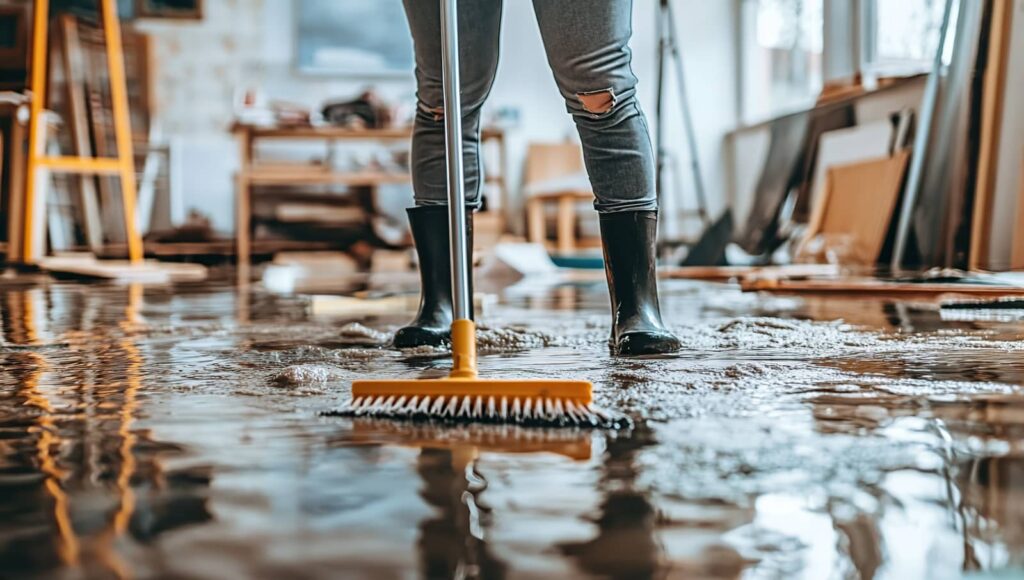
Shut off power to the affected area if it’s safe, then wear gloves, boots, and a mask. Use a wet/dry vacuum, submersible pump, or buckets to extract water from the lowest points first.
Move methodically room by room, keeping pathways clear so your team can work without hazards.
Empty wet contents only after you’ve separated salvageable items from waste. Bag debris, label contaminated materials, and place them outside the living area.
Open exterior doors only when needed for access. Clean tools between tasks to prevent spread.
If the water level is high or contamination is suspected, contact licensed professionals. You’re not handling this alone; safe, organized cleanup protects everyone.
Dry Out Flood-Damaged Walls, Floors, and Furniture
After the standing water is gone, you need to dry walls, floors, and furniture fast to limit mold and structural damage. Open windows if weather allows, and run fans to move air across wet surfaces.
Use dehumidifiers to pull moisture from rooms and keep them closed while equipment runs. Remove cushions, rugs, and loose items so air can reach hidden areas. Lift furniture blocks or foil to prevent further wicking.
- Check drywall and trim for trapped moisture.
- Dry hardwood and subflooring with steady airflow.
- Separate wet furniture to speed evaporation.
- Monitor humidity until materials feel dry.
Stay consistent, because thorough drying protects your home and helps you and your household regain a safe, livable space together.
Remove Mold and Finish Repairs
When surfaces are fully dry, remove any mold growth immediately using protective gear, detergent, and a disinfecting solution approved for the affected material.
You should isolate the work area, open windows if weather allows, and run exhaust fans to reduce spores.
Scrub porous surfaces lightly, then discard items that still smell musty or show deep staining. Clean hard surfaces, rinse them, and dry them completely.
Inspect framing, drywall, insulation, and subfloors for hidden growth; if you find widespread contamination, call a licensed remediation professional.
After cleanup, replace damaged materials, seal gaps, and repaint only after moisture readings stay normal.
Finish by testing outlets, verifying plumbing, and documenting repairs so you and your household can move forward with confidence and a safer, healthier home.
Frequently Asked Questions
How Do I Prevent Future Flooding in My Home?
You can prevent future flooding by sealing foundation cracks, installing sump pumps, cleaning gutters, grading soil away from walls, adding backflow valves, and maintaining drains. These steps protect your home and strengthen your community.
Which Belongings Should I Replace After Flooding?
You should replace porous items like mattresses, pillows, upholstered furniture, carpets, drywall, insulation, and any contaminated food or medicines. Keep hard, nonporous items if you can disinfect them thoroughly and verify they’re structurally sound.
How Soon Should I Contact My Insurance Company?
Contact your insurance company immediately, ideally within 24 hours. You’ll protect your claim, document losses sooner, and get guidance fast. If possible, call before moving belongings, then follow their instructions and keep every receipt.
Can Flood Damage Affect My Home’s Foundation?
Absolutely—flood damage can absolutely hammer your home’s foundation. You’ll see cracks, settling, or shifting, and you should inspect drainage, soil saturation, and structural movement quickly. Acting fast helps you stay safe and connected.
What Professionals Should I Hire for Flood Recovery?
You should hire a water damage restoration contractor, licensed electrician, plumber, mold remediation specialist, and structural engineer if needed. They’ll assess hazards, dry materials, sanitize surfaces, and verify your home’s safety.
Review
By checking safety, stopping the source, documenting damage, and draining standing water, you set recovery in motion. Then, by drying walls, floors, and furniture with diligence, you diminish decay and deter dangerous mold. Finish by removing ruined materials and completing careful repairs, so your house returns to a stable, sound state. Keep your records organized, because clear claims and clean documentation can speed support. With steady steps and smart action, you’ll restore your home.